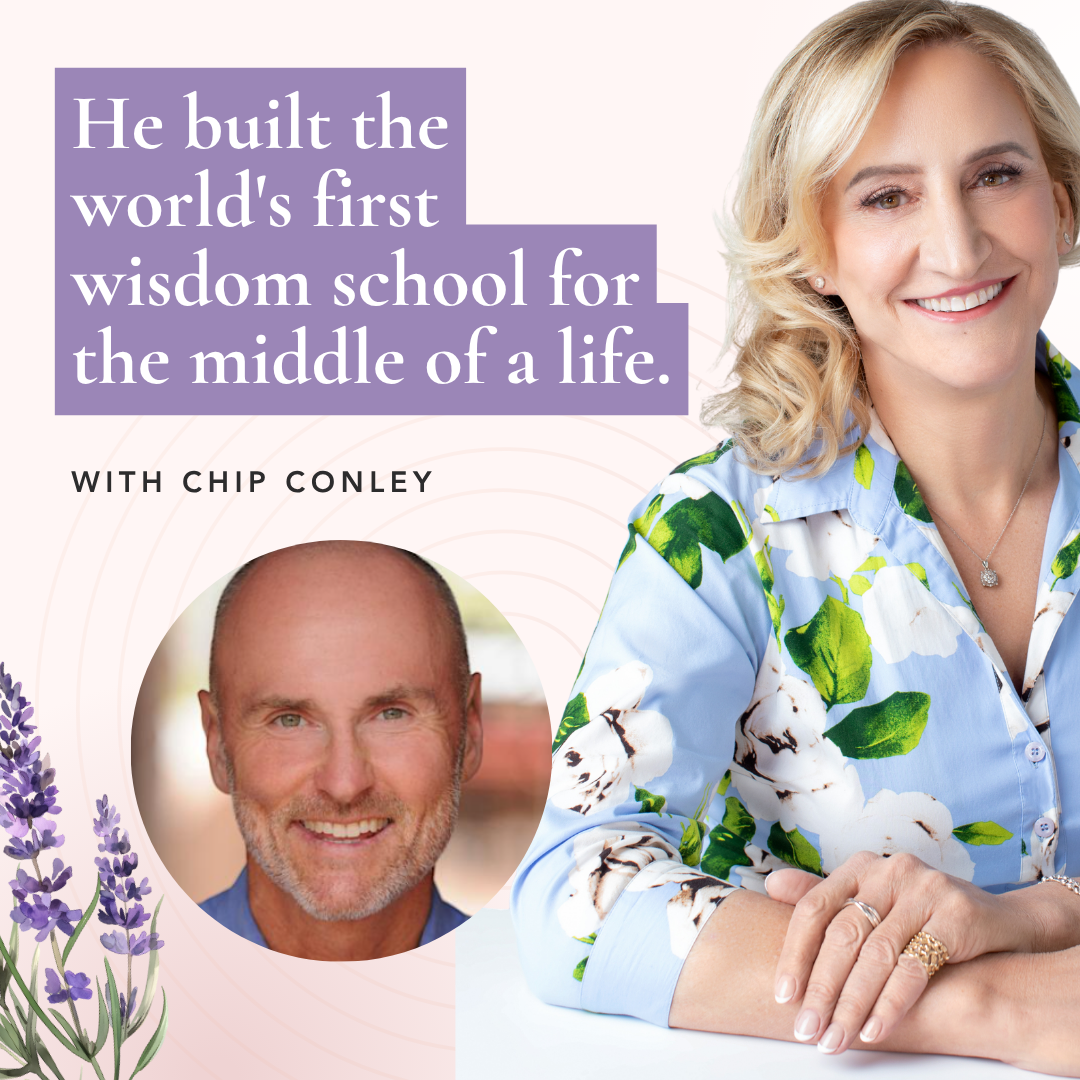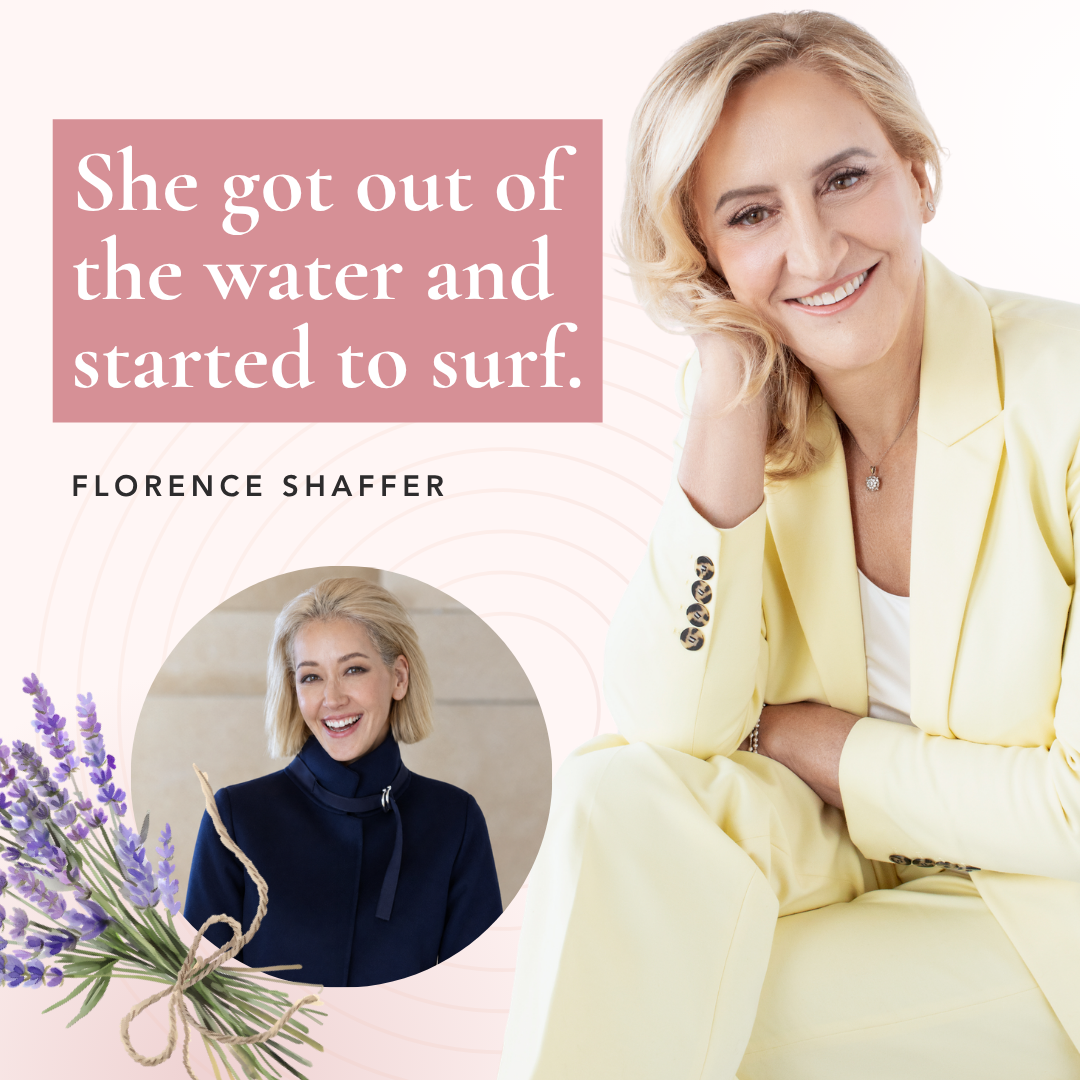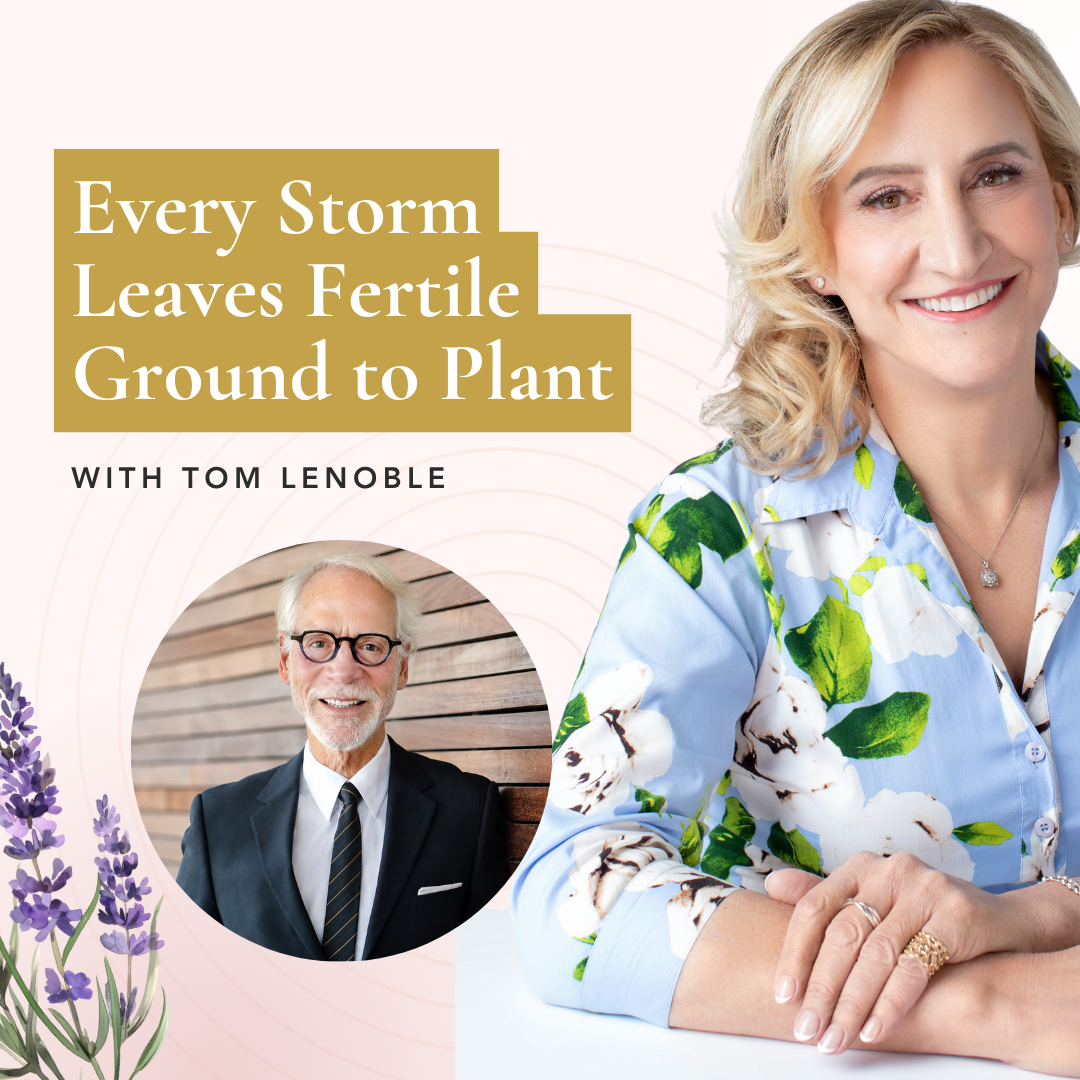

Inside the most powerful boardrooms in the world, a woman walks in.
She arrives quietly. The credentials never lead. By the time she has crossed the room and found her chair, she has already taken the temperature of every person in it, and what she does next has nothing to do with strategy decks or quarterly targets.
She helps the people in the room drop their armour.
This is the work of Amy Elizabeth Fox. For twenty years she has practised it in Fortune 500 boardrooms and the world’s most demanding professional services firms, with global CEOs and the people two and three levels below them who will run those companies next, at Oxford, across continents. Around it she has built a global firm of more than three hundred practitioners, united by a single, almost audacious intention.
They are trying to bring love to business.
When Amy says it that simply, you do not hear it as a slogan. You hear it as twenty years of practice. And you sense, immediately, that the woman saying it is the reason it has worked.
What follows is a portrait. Who she is. What she has built. What her life is quietly teaching the rest of us about leadership in this moment. The full conversation sits at the top of the page if you would like to spend an evening with her. The piece below is for those who want to understand her first.
A figure unlike anyone else in her field
Amy is the co-founder and CEO of Mobius Executive Leadership, the firm she and her sister Erica Ariel Fox started in 2005.
Mobius sits at an intersection most consultancies cannot reach. On one side, the rigour. Harvard-trained methodology, evidence-based interventions, the kind of senior expert network that reads like a graduate-level reading list: Otto Scharmer, Adam Kahane, Peter Senge, Amy Edmondson, Bob Kegan, Linda Hill, Tom DeLong.
On the other side, the depth. Trauma-informed practice. Somatics. Mythology. Shadow work. Expressive arts. Meditation. The patient work of integration. Mobius programs feature poets and cellists on the same stages as Fortune 500 executives. The faculty come from psychology, theatre, philosophy, and the great spiritual traditions. The clients are some of the most demanding organisations on earth, and they have stayed for a decade or more, because the work changes people.
What makes Amy unusual is that she could only have built what she built. Plenty of people have built unusual firms. The architecture of Mobius is a direct expression of the woman who designed it. Walk into a room she is holding and you understand instantly. She has actually lived everything she helps other people see.
She is, in the language we use here at Sincerely, an Athena. Fierce and strategic and wise. Creative and discerning. Humbling, nurturing, kind. Whole in her essence.
She became this through a particular kind of formation, the kind most leaders never go through because almost no one would choose it.
The illness that became the gift
When Amy was twenty-two, she was diagnosed with non-Hodgkin’s lymphoma.
She spent a year in chemotherapy and radiation. In the decades since, she has refused to call it the worst thing that ever happened to her. She calls it the greatest gift she has ever been given.
“Everything I’ve become, or done, or chosen, was really informed by the wisdom I took from my illness.”
The reframing is not denial. Amy is too honest for that. The illness was soul-shaping. The CAT scan machine. The nights of not knowing whether she would live to twenty-three. In dissolving the ego of a young woman in her twenties, the illness returned her to a question that has shaped every choice she has made since.
What are you here for, now that you know how short it is.
The question was already in her when she walked into the Cathedral Church of Saint John the Divine, in New York. It is what made her say yes to a posting most people her age would have considered eccentric. In the late eighties and through the nineties, the Cathedral was a crossroads. Ram Dass was teaching there. Carl Sagan was a regular presence. Paul Gorman ran the National Religious Partnership for the Environment from an office in the building. Vice President Al Gore came through to talk about climate. Amy, as Director of Public Affairs, spent ten years inside that ecosystem, translating between scientific evidence and parish congregations, helping faith communities find language for the planetary breakdown they could feel but could not yet name.
Most people in her generation who went into climate work in the late eighties were moved by urgency. Amy was moved by survival. The cancer had already taught her how brief this is. The Cathedral years were the first long answer to the question her illness had handed her.
The cathedral that arrives
Toward the end of her decade at the Cathedral, Amy was invited to a week with Ram Dass.
On the final night, the group was chanting Hindu Sanskrit names of God. Amy is tone deaf and self-conscious about it. She almost did not go. She sat in the back row, ready to leave.
Then the singing started.
“Some part of my heart just broke open. It was the quality of devotion and the quality of unconditional love. And that frequency, I’ve been following ever since.”
Take her seriously on her own terms. She is telling a story about a frequency. Something that arrived in a back room on a night she almost skipped, and now orders the rest of her life. Forty years on, she is still listening for it. She has built a global firm around it. The boardrooms she walks into now are, in a sense, larger versions of that back row, full of people who do not yet know what they came for.
She gave me language for this, and I have not been able to put it down.
“In the journey to consciousness and to service and to self-love, there’s a cathedral that arrives.”
The image is precise. A cathedral. Something that arrives, rather than something you build. Something you walk into rather than something you achieve. Something that finds you in the most unlikely places and is unmistakable when it does.
This is Amy’s most profound spiritual proposition, and it deserves time.
Most of us are taught to think of becoming as a construction project. We acquire practices, frameworks, identities, achievements. We build and build, until we believe we have constructed the person we were meant to be. Amy lives in a different model entirely. The cathedral is something the soul recognises when the soul is ready to recognise it. You can be sitting in the back row of a chanting circle. You can be reading a book that has been on your nightstand for four years. You can be standing in a hospital corridor in your twenties listening to a diagnosis. You can be in a Mobius retreat, or a long conversation, or a quiet kitchen at three in the morning. The setting is incidental. What matters is the recognition.
For Amy, the cathedral was a Sanskrit chant. For her clients, it might be something inside a Mobius programme. For someone reading this, it might be the sentence in this paragraph that has just made you pause.
The cathedral arrives more than once. We come back to that.
Two years carrying her own water
When the decade at the Cathedral ended, Amy did not know what would come next.
What she did next was the quietly radical decision of her life.
She went into the woods.
She lived near a lake. She lived in silence. She carried her own water. For two years she metabolised the unprocessed grief, the unprocessed terror, the unprocessed joy of the decade behind her. The frequency she had heard in the back row needed somewhere to land inside her body, and the woods was the only place quiet enough to let it.
Most leadership stories edit this part out. The two years where nothing was happening. The years where you cannot point to a title or an achievement. The years where you are not building anything visible. They are usually mentioned, if at all, as a “gap” or a “sabbatical” or a “period of self-discovery.” Amy speaks about hers without that softening. She describes a season of carrying her own water and learning what she was made of when nobody was watching.
There is a teaching here, and it is one of the hardest teachings to hear in a culture that measures everything by output. Some of the most important work of a life happens during the years that look, from the outside, like nothing at all. The years of integration. The years when what came before is being digested and what comes next is gestating. Amy’s two years near the lake are the hidden chapter of the Mobius story. Without them, Mobius could not have been built.
When she came out, she went and got a master’s degree in counselling. She worked in an alcohol rehabilitation centre. She trained at Harvard with Doug Stone, Sheila Heen, and Bruce Patton, the team who later wrote Difficult Conversations. She taught negotiation. She helped people have the conversations they had spent years avoiding.
And then, in 2005, she and Erica decided to build something of their own.
They called it Mobius. The single continuous surface with no separation between inside and outside. The work and the woman became one piece.
What she has actually built
What Amy has built deserves more than a skim.
Mobius is a constellation. More than three hundred practitioners working across continents, in service of senior executives and the organisations they lead. The methodology draws on adult development theory, neuroscience, trauma-informed practice, psychology, mythology, somatics, expressive arts, and what Amy, with characteristic gentleness, calls “the deep wisdom of spiritual traditions.” The clients are Fortune 500 companies. The faculty include therapists, scholars, mystics, and artists. The work has been delivered to thousands of executives across more than a decade of partnership with the global leadership advisory firm Egon Zehnder. Amy is also lead faculty on Thomas Hüebl’s Timeless Wisdom Training and co-leads a first-of-its-kind year-long certification in Trauma Informed Consulting and Coaching with him. She teaches at Oxford’s Saïd Business School through the African Leadership Institute’s Desmond Tutu Fellows Program.
None of these institutions are soft. They pay for it because it moves people.
What Mobius proves, in the simplest possible terms, is that the world’s most demanding organisations do not need their leaders to be tougher. They need them to be more whole. They need them to drop the armour. They need them to lower the level of fear in the systems they hold. They need the kind of inner work most leadership development has spent forty years pretending was a private matter.
This is the radical thesis underneath the soft language. Amy has been quietly running an experiment on the most senior people in the world. The experiment has been working for twenty years. She lets the work speak for itself.
Underneath the modesty there is a proposition. The proposition is that the inherited model of leadership rests on a pretence. The pretence is that we can develop people from the outside in, by accumulating frameworks and competencies and behaviours, without ever acknowledging the inside.
The pretence has run its course. Amy is part of what comes next.
A universal pandemic
There is one finding from Amy’s twenty years that organises everything else.
Before every Mobius leadership programme, the participants are screened for trauma. Thousands of senior executives have now sat in that screening. The pattern is consistent.
“I have hardly ever met anyone from anywhere in the world where there isn’t some kind of trauma. So this is a universal pandemic. Generations of violence, addiction, mental health issues, poverty, racism, colonialism.”
She said it as data.
This is the empirical finding of two decades of working with the most senior leaders in global business. Almost universally, they are carrying something. Generational wounds, family wounds, cultural wounds, personal wounds. Most of them have never told anyone. Many of them have not allowed themselves to know it. And they carry that unhealed history into every boardroom, every difficult conversation, every culture they build, every team they lead.
Amy is naming the model of leadership that pretends the inside does not exist. That model can hold for as long as the world is stable. It cannot hold now. The complexity is too high. The pace is too fast. The interconnection of the four existential crises, social fracture, economic divide, planetary degradation, and the proliferation of disinformation and misinformation accelerated by ai, is asking leaders to bring a kind of presence the old model never trained them for.
Her proposition is gentler than this analysis sounds. She is arguing that the work of becoming whole, the slow, cyclical, embodied work of integration, is the precondition for the kind of leadership our moment requires. Skills sit on top of it. Frameworks sit on top of it. Without it, none of them hold.
For anyone reading this who has been quietly carrying something, the news Amy is delivering is, in its own way, the kindest news in leadership development today. You are not broken. You are not behind. You are not alone. You are in the company of almost every senior leader in the world. And the work of integrating what you carry is, quietly, the work of our whole species.
On cycles, and never being done
There is a particular trap in the transformation industry, and Amy refuses it.
The trap is the promise of arrival. The promise that there is a version of you, somewhere ahead, that is finally healed, finally whole, finally finished. Most spiritual marketing, most leadership development, most personal growth language is built around this implicit promise. Do the work, and you will arrive.
Amy lives in a different model.
“It isn’t like there was a dark phase and now there’s a light phase. I wish I could say it that way but that’s not been my experience. It’s cyclical. And in a way that’s very beautiful, because it just means we’re never done.”
This is one of the most important sentences anyone has spoken on the subject of becoming. The authority in it comes from forty years of practice.
In early 2023, Amy spent four months in bed. Michael Singer’s books had been on her nightstand for four years before that, unable to be read. In the season of collapse, they finally made sense. The teacher had been there the entire time. She had not been ready.
This is the cycle. The light phases give way to dark phases. The dark phases give way to light. The teacher arrives when you can finally hear them. The cathedral arrives more than once. Each return adds another layer. The shape of the work is spiral. It deepens through cycles.
For anyone in a long, dark season, the gift Amy offers is the release from the burden of waiting for it to end. The dark season is itself the path. The path is cyclical and it is beautiful, and we are never done.
This is, I think, the most important shift Sincerely is trying to make in how we talk about becoming. Amy says it more clearly than I could.
What it looks like to step down at the apex
In November of 2025, Amy told me that the thirty-first of December would mark the end of her twenty years as CEO and co-founder of Mobius.
She is stepping down.
Not from the work. Not from the movement. Someone else will run the firm. Amy is moving toward something quieter. She described it as “a restorative renaissance.” Local. Intimate. Person by person. The kind of healing of collective trauma that does not happen on a stage and does not scale through technology.
There is a story about leadership that says the apex is the goal. You climb. You arrive. You hold the position as long as possible. You optimise for visibility and influence and scale.
Amy is, with this decision, refuting that story.
She is at the apex. The firm she built will continue to grow under different leadership, and her name will continue to carry weight in the field. She is stepping out because she has heard the next frequency, and she has spent forty years following the frequencies as they arrive. She is internally referenced. She trusts the inner compass over the external scoreboard.
In a culture that mistakes momentum for meaning, this kind of choice is itself a teaching. The achievement model has limits. The internally referenced life is the real life. You can have built one of the world’s most extraordinary firms, and the right next move can still be to step out of it.
There is also something specific Amy has named about the moment we are in. She has been a lifelong social activist. She no longer believes outer agitation alone will carry us where we need to go.
“Activism as activism has hit the wall.”
What she calls the restorative renaissance is the work that comes next. It does not happen on stages. It happens in living rooms and small circles and intimate retreats and one-to-one conversations over a long time. It is the slow healing of collective trauma at a local level. It is the patient repair of the relational fabric. Amy is going where the work is asking her to go.
Whatever she steps into now will, in her quiet way, move something. Her instincts have not led her wrong in forty years.
What her life is asking us to see
The agreement of The Sincerely Show is a simple one. The guest is witnessed. They sit, they are seen, they tell the truth about the path they have walked, and the meaning is made together with the listener.
Because Amy has lived the way she has lived, the witnessing becomes a teaching of its own. Her life is the lesson.
What her life teaches is this.
You can live through what you cannot imagine living through, and what emerges will be more whole than what entered. The cathedral arrives, often when you least expect it, and once you have heard the frequency, you can follow it for the rest of your life. The work of integrating what you carry is the work of our whole species, and you are in the company of almost everyone leading anything. The path is cyclical. We are never done. And the real story is quieter and slower and more beautiful than the achievement story. It asks more of you than you knew you had.
And love can be brought into business. Into the most demanding business. Into Fortune 500 boardrooms full of strategy decks and quarterly targets. Amy has practised this for twenty years, and the proof is in the firm she built, in the people who have come through it, and in the next chapter she is now walking into.
This is the kind of leadership our moment requires.
It is the kind of leadership Sincerely was built to honour.
A few hours with Amy
The full conversation with Amy sits at the top of this page. Two hours, unhurried. We move through her childhood, her cancer, the Cathedral years, the kirtan night, the two years in the woods, the founding of Mobius, what she has learned about trauma in leadership, what comes next, and the cycle she lives inside.
You will hear her say things, in her own voice and her own quietness, that no portrait can fully carry. The pauses. The slight catches of breath. The way she universalises her own pain the moment she names it. The frequency she has been following for forty years, audible in the way she speaks.
Take the conversation slowly. When you have time. With a cup of something warm. There is no hurry. The library is always here.
Three things Amy said I am still sitting with
“Some part of my heart just broke open. It was the quality of devotion and the quality of unconditional love. And that frequency, I’ve been following ever since.”
“I have hardly ever met anyone from anywhere in the world where there isn’t some kind of trauma. This is a universal pandemic.”
“In the journey to consciousness and to service and to self-love, there’s a cathedral that arrives.”
About Amy Elizabeth Fox
Amy Elizabeth Fox is the co-founder and CEO of Mobius Executive Leadership, a global transformational leadership firm she has led for twenty years. Before Mobius, she worked at the Cathedral Church of Saint John the Divine alongside Ram Dass, Carl Sagan, and Vice President Al Gore, engaging American faith communities in the environmental movement. She is a senior student and faculty member with mystical teacher Thomas Hüebl, and teaches at Oxford’s Saïd Business School through the African Leadership Institute. In 2026 she co-authored Leading in Chaos with Nicholas Janni. She holds a Master’s in counselling from Lesley College and a BA in Psychology from Wesleyan University.
Find Amy: amyelizabethfox.com ·Mobius Executive Leadership ·LinkedIn ·Leading in Chaos
Please stay.
Don’t just visit. This home is yours too.
There is a room here for you. It has always been here, waiting.
Once a week, you’ll receive a letter. Reflections from me. Sincerely recommendations. Small stories worth sitting with. Quiet offerings for the path, written for people who want to live a more gentle, bright, and honest life.
You’ll be the first to know when new conversations arrive on The Sincerely Show. When gatherings are announced. When the doors of Maison Millefleurs open for retreats.
The door is never locked. We’ve been preparing your room for a while now.
This conversation is for reflection and perspective only and should not be relied on as therapy or professional advice. Please seek qualified support where needed before making any decisions based on the information you learn through this conversation. This content is also subject to our full Terms and Conditions, which you can review on our website.