


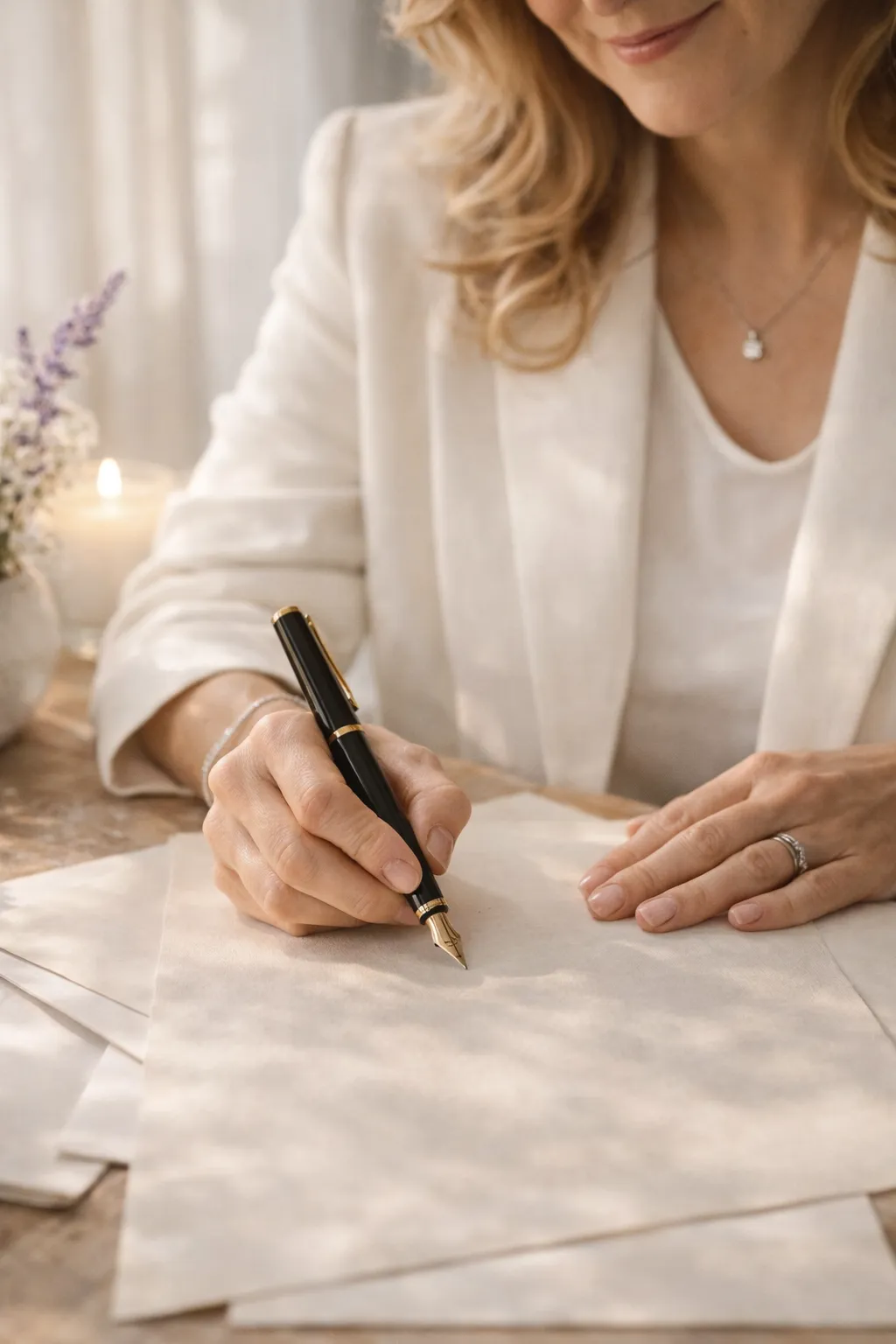
On a recent Friday evening at Decanter, my friend Karen Palmer was sitting at her typewriter, writing poems for the people gathered there. It was one of the final weeks of this special place as we know it. MJ and Angie have fostered and nurtured such a loving community here in Prince Edward County, and these Friday gatherings have become a cherished part of our lives.
Karen calls her typewriter Olive. She’s an Olivetti, and Decanter was the first place Olive made her debut. And here they were again, Karen and Olive, in one of the final weeks of Decanter as we know it.
There is something magical about watching them together. You give Karen a word, and she sits down at Olive and begins, spontaneous and in flow, channelling her poetic gifts from somewhere deep within, from an emptiness beyond what we can imagine or see. A short while later, she brings you your poem. Then she reads it to you, and the tears flow.
The word I gave her was sincerely.
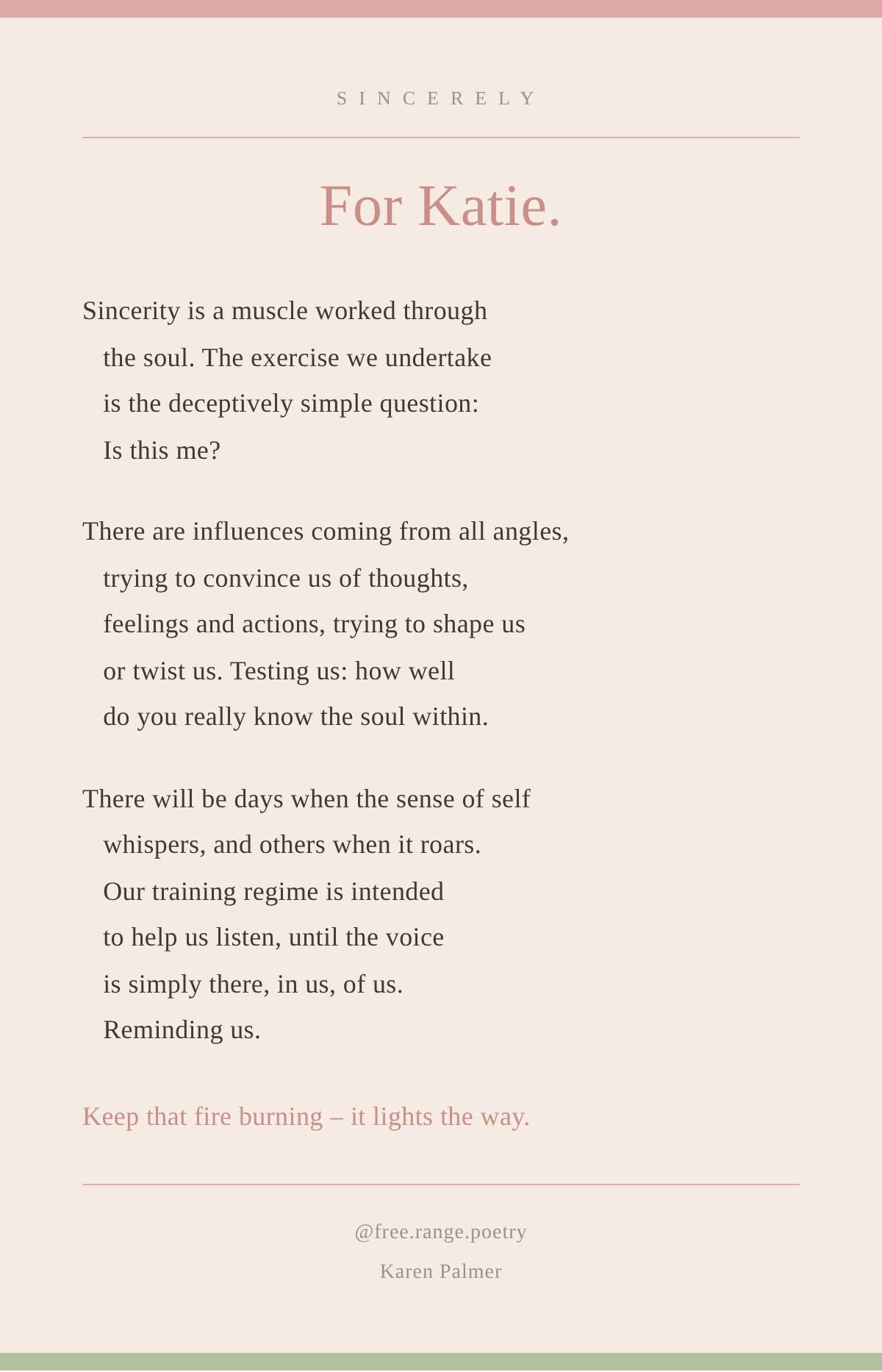
Is this me? Such a small question, with so much within it. I love that our sense of self can whisper on some days and roar on others, and that the practice is to listen. With so much around us trying to shape who we are, I wonder how often we pause long enough to hear ourselves. And how often we recognise something of our soul in what we feel drawn to create and share.
Karen has given so much of herself to promoting Prince Edward County and shining a light on the people who make it what it is: the artisans, the winemakers, the painters, the antique shop owners, the people behind our bed-and-breakfasts, our shops and businesses. Bringing them to the world, and bringing the world to them. She is also the author of Spellbound: Inside West Africa’s Witch Camps. And here she is, at her typewriter, sharing another of her gifts.
MJ and Angie have brought their gifts into our lives through Decanter, through the warmth and hospitality they offer and the friendships they have nurtured. MJ shares her gifts through yoga too, and I am so touched that she has offered to bring her practice to Maison Millefleurs. We will miss Decanter as we know it, and we are looking forward to the new ways they will share their gifts with the County and beyond.
We are such multilayered, multifaceted human beings. How beautiful it is when we slow down enough to observe, to witness, to be curious about all the facets of another person. And of ourselves. We may know someone through their work, through one part of their life, and there is still so much more to discover.
I think again of Karen and Olive, in this gathering that MJ and Angie have brought into being. A poem about listening to the soul, offered in a place where so many people have shared something of their own.
Thank you, Karen, for the gift of this sincerely poem and for your friendship. And thank you, MJ and Angie, for all the love you have brought into our lives.
This week, I had the honour of joining my friend Susan’s book club at her cottage north of Toronto. What a beautiful group of women. Susan had invited me to also join them for a sleepover too, at a place my family and I once called home.Her cottage is our old cottage, where my former partner and I raised our four children and shared more than twenty years of family life.
The lake, the road, the neighbours and the cottage were all part of a place of safety, of love, of belonging. Returning brought back so many memories. The games and the dance parties, the movie nights, the meals, the gatherings with friends, the time on the lake and the countless adventures we shared. There were no tears, only warmth. Such a beautiful chapter in my life and in the lives of my family.
Susan and I have become good friends, and it means so much to see the love she and her family have for this cottage and this lake. To witness how a place that brought our family together is now doing the same for theirs. They also hold such care and respect for our history here, for the years when we were the stewards of this beautiful place. There is something deeply moving about being welcomed back into a home where you have shared so much love, and being able to experience the love that another family is bringing to it.
We sat in the gazebo, exploring the many questions that had emerged as the women read Sincerely, Katherine. We talked about my life, the love and patience of my family and friends, and the fear and courage that can accompany following our hearts. That deeper calling that seems to come from our soul, from our essence, towards the fullness of who we are. What inspires us? What ignites our heart and soul? And what happens in our lives and our relationships when we begin to listen?
We spoke about the anxieties and hurts that can come with facing our fears, and about the different ways people accompany us through life. Some relationships are brief, yet leave us with an experience or a lesson that stays. Others last for a season, helping us learn and grow. And some last a lifetime, moving through their own seasons, their own periods of change and renewal.
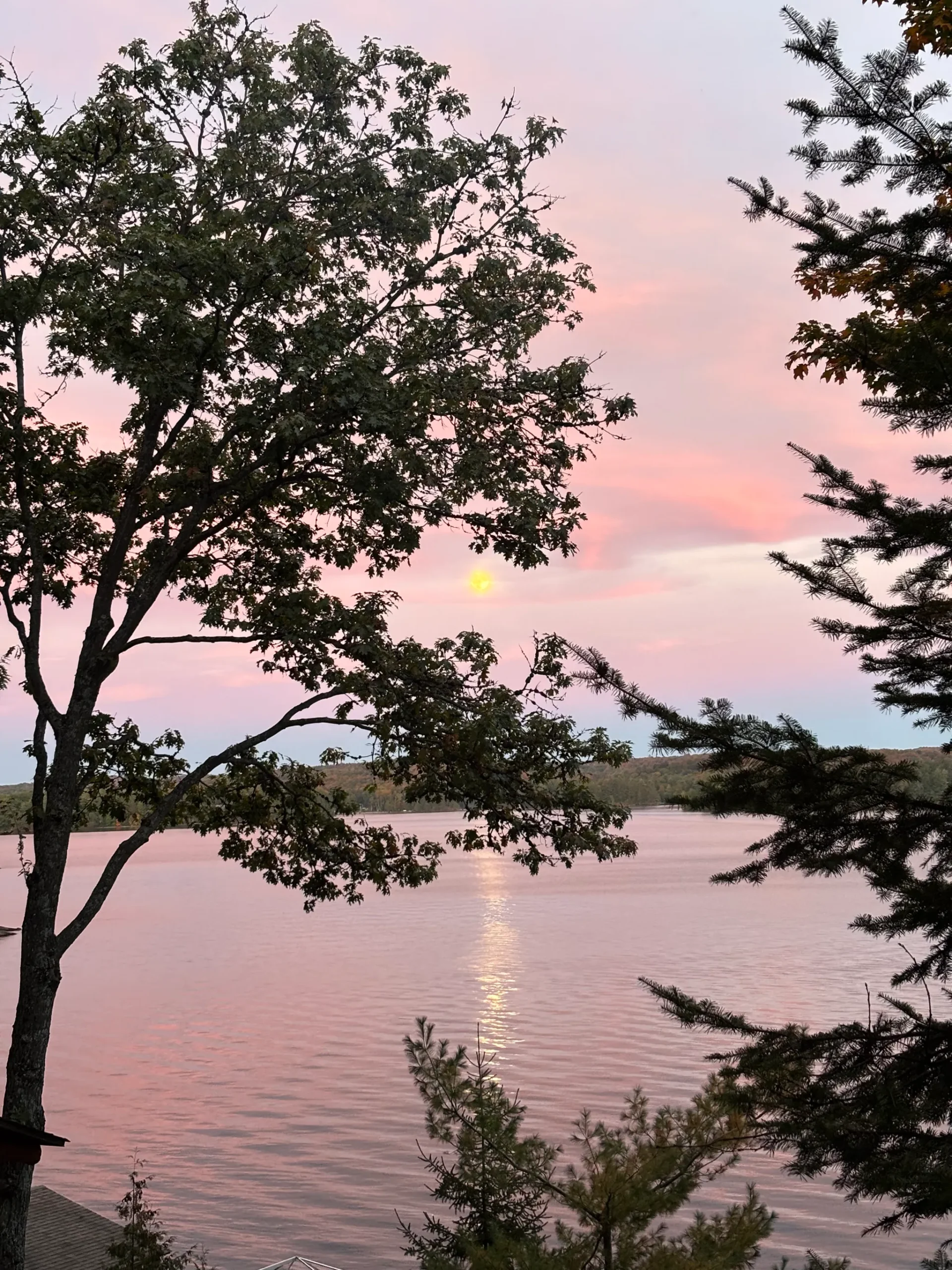
After the gazebo and sunset over the lake, we returned to the cottage for a beautiful meal at the dining room table, where my family and friends once sat. More memories came flooding back, including a sing-along with my brother-in-law George, my friend Dawn and my dear friend Al, may he rest in peace. How much we had shared around that table. And here I was, gathered around it again, sharing a meal and creating new memories with friends.
Later, we moved into the living room by the fire, and Patricia started the dance party. Just like old times. The kind of dance party where the group slowly thins out as the evening carries on. Some make an Irish exit, while others give everyone a hug before leaving. And then there are those who carry on into the wee hours of the morning, moving from dancing to a hypercompetitive ping-pong tournament in the garage.
Over breakfast the following morning, we continued the conversations we had begun in the gazebo and replayed the antics of the night before. The deeper questions and the fun of being together, carrying on into another day.
Beyond beautiful.
It is such an honour to experience how Sincerely, Katherine. speaks to women and men, to people from so many walks of life, well beyond the LGBT community. This was my hope in sharing my story, and it is my hope in sharing the stories of the guests on The Sincerely Show. That in spending time with another person’s life, we might feel seen in our own. That we might feel less alone, find hope, and discover something that brings meaning or possibility to our journey.
There is so much we can explore when we give one another the space, the care and the curiosity to do so. A question about someone else’s life can bring us closer to something within ourselves. Something we long for, something that inspires us, something we have been afraid to follow. And perhaps, in hearing how another person found their way, we begin to find a little more courage for our own.
Fear is not the place to stop. Fear is the place to be curious. To observe what is happening within us, to listen for that deeper calling, and to explore the possibility of growing towards a fuller expression of ourselves. I hope these conversations offer some of that possibility, some sense of the love and freedom that can come as we find our own way.
I look forward to seeing this group again, and to the next opportunity to gather with people who want to explore these deeper questions. There is such a gift in being curious about one another, in receiving another person’s story and allowing it to touch our own.
And there was so much of that gift in this visit. The love Susan and her family have for the cottage and for one another. Their respect for our family’s history, and my joy in witnessing theirs unfold. The questions in the gazebo, the memories around the table, the dancing and the morning after. This exchange of love, of care, of curiosity, this feeling of being seen by one another, is one of the most special gifts I think we can receive.
Thank you, Susan, for the gift of your friendship, and for welcoming me home to your home, the place my family and I once called ours.
So much love and so much respect.
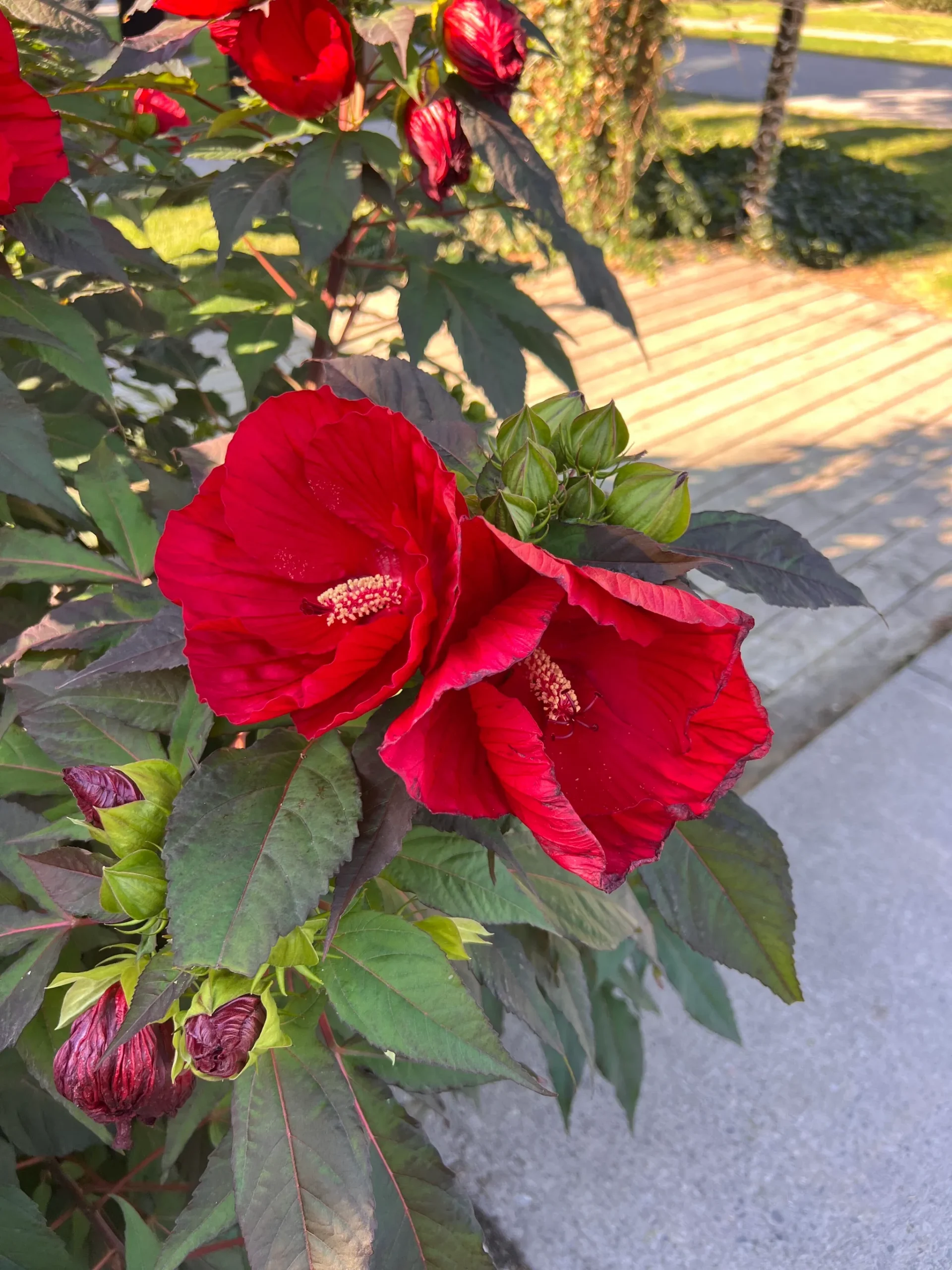
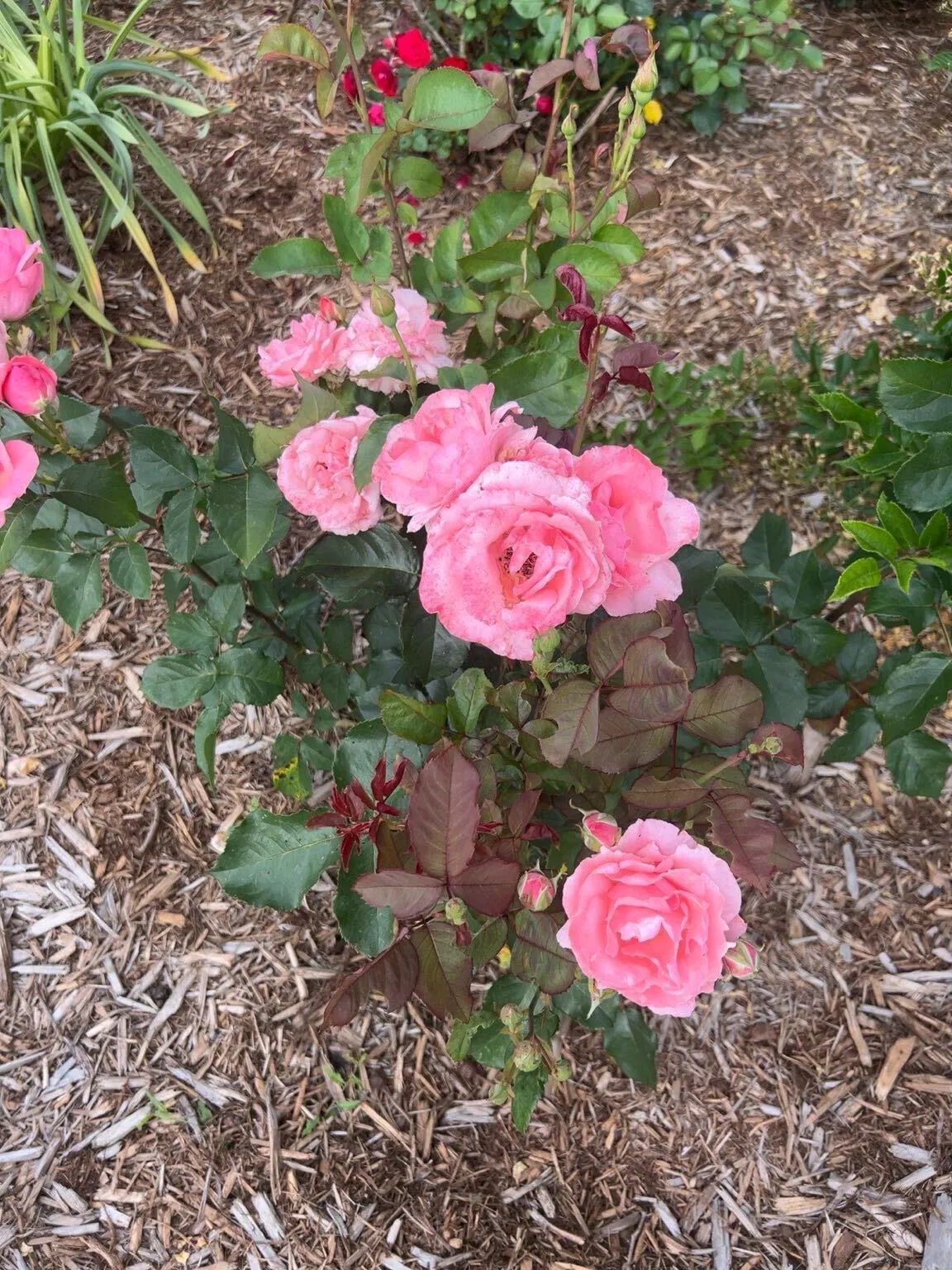
The hibiscus flowers are blooming in the garden, and the roses are beginning to flower again too.
They are so beautiful. The depth of colour, the detail within each flower. I find myself pausing to witness them and appreciate the creativity and care that have made this beautiful garden.
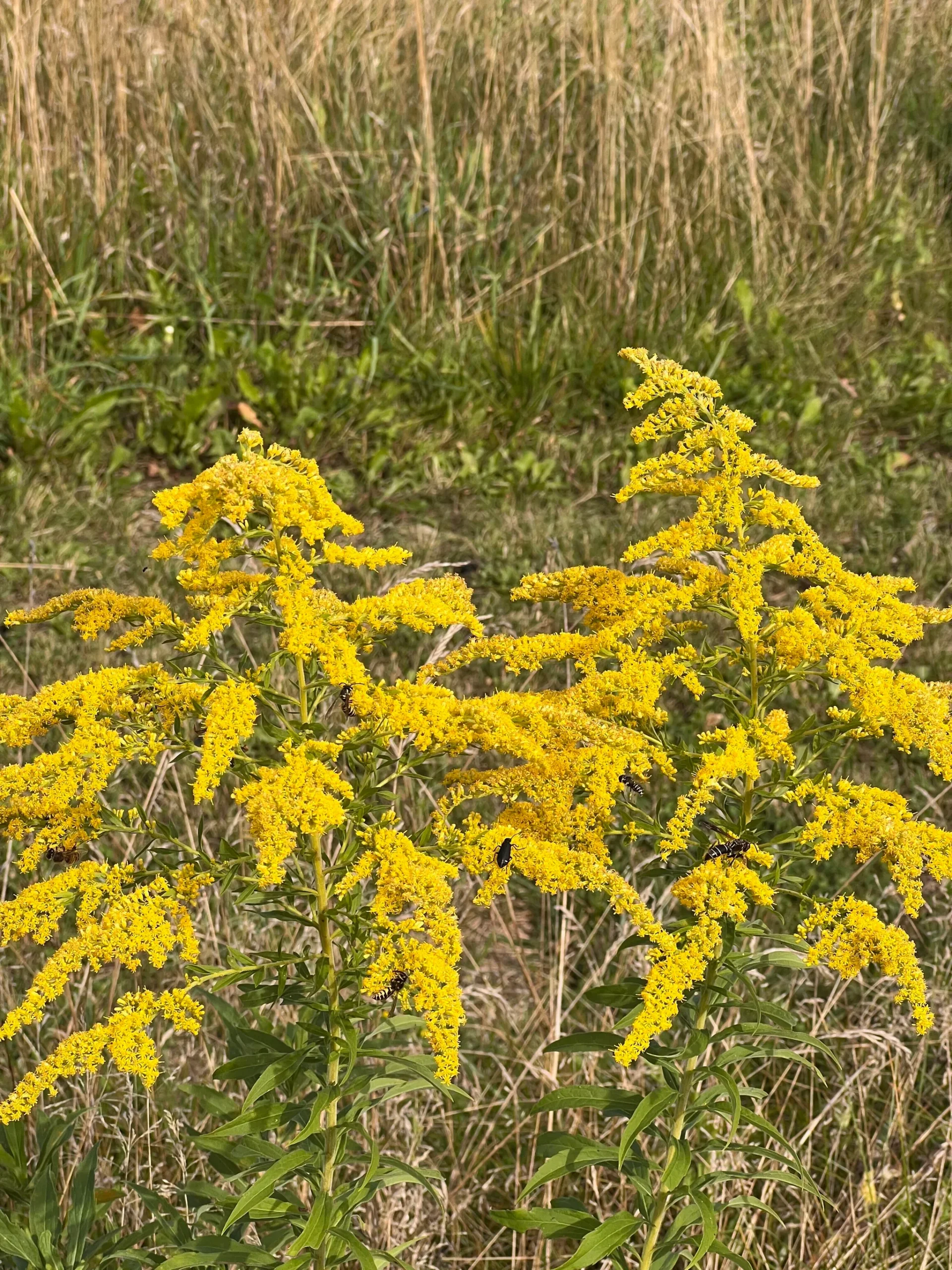
And when I walk through the meadows, I experience a beauty that moves me deeply, in a different way. Every few weeks, something new is flowering. There are purple asters and goldenrod now, and countless other flowers whose names I am still learning. They arrive as a surprise, a gift, each with an elegance of their own, each offering something to the meadow, and beyond.
Tall purple thistles have emerged in the meadow this year. A lot of them. Their flowers are now giving way to soft white seed heads. I am seeing many more monarch butterflies here this year than last. Sometimes there are a dozen at a time around the patches of thistles, feeding on their flowers. So beautiful. Awe. Watching them together, I feel a harmony and a love between these lives that is hard to put into words. A love song.
Prince Edward County is an important stopping place on their migration to Mexico. At Prince Edward Point, thousands of monarchs feed and rest in late summer and early autumn before continuing south. Thistle flowers provide nectar for that journey. Watching the butterflies in my own meadow, I feel a deeper appreciation for what this land and these flowers are offering.
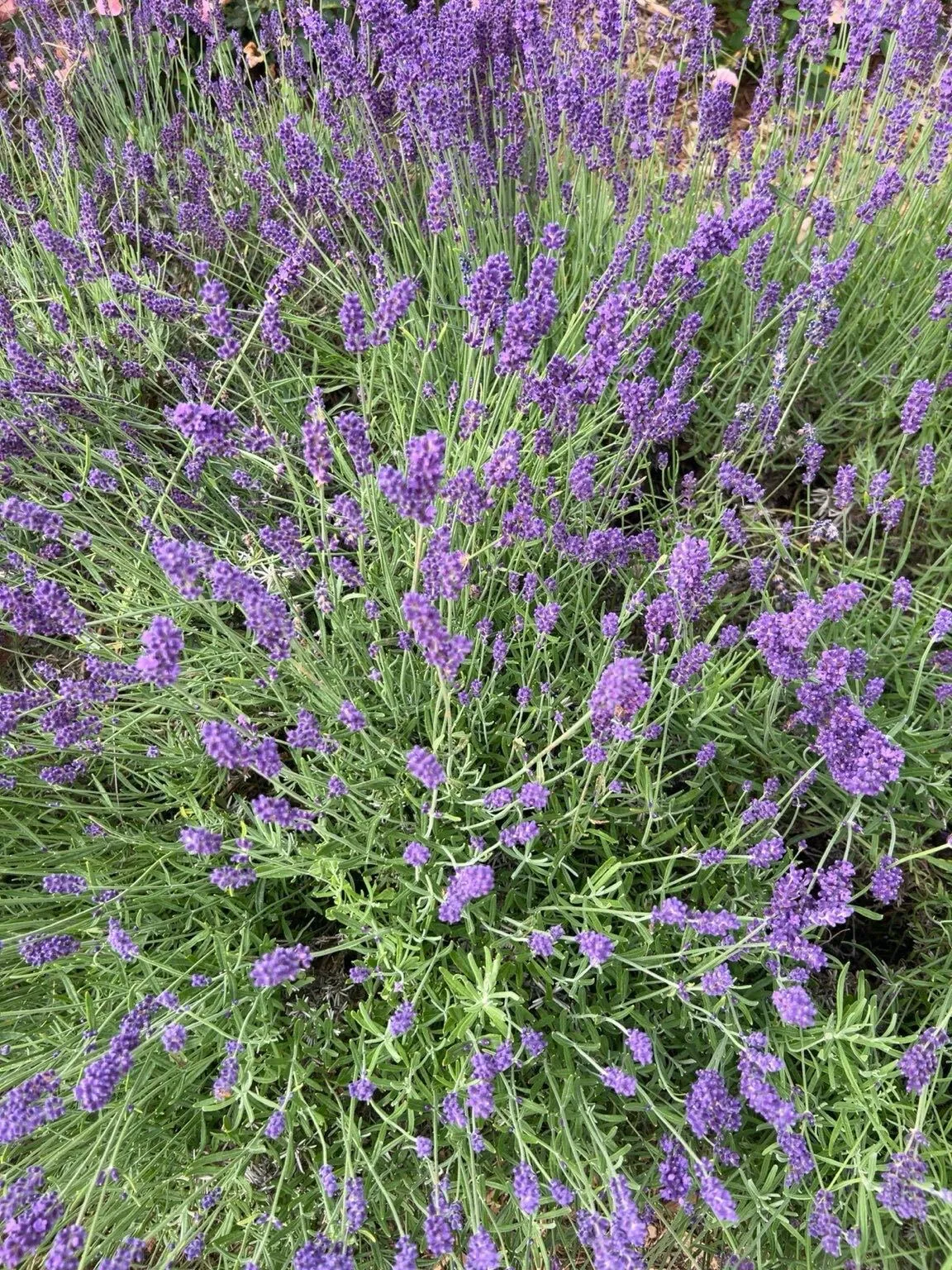
I watch the bees through the many seasons of flowers, moving from the lavender to the Russian sage, and on and on. As one flowering gives way to another, life continues to find its way to what is opening. Day by day, week by week, month by month, there is an ongoing melody of beauty and creativity playing out around me. It is magic to watch these lives dance, each in its own way and together, in their profound beauty.
As a child on the farm, I was taught to dislike the thistles and burdock bushes. We were taught to cut the thistles down. And at the same time, my parents, with their deep Eastern European roots, also carried an appreciation for what nature gifts us. There was wild mint. My father made cream from calendula flowers. He collected stinging nettles and made nettle tea. My parents also made and drank Swedish bitters from German wild herbs as part of their health routine. Alongside what we were taught to remove, there was a knowing about what nature offered and how to receive its beauty.
Now I am standing among the thistles I was taught to cut down, feeling awe. I see their colour and form, and the life moving between them. I find myself wondering how much beauty I have walked past, perhaps because I had already decided what I was looking at or where I needed to go.
I still feel a profound appreciation for human creativity and talent. I love making things with my own hands, and a garden can be a beautiful expression of that creativity and love. Yet I also see how much we shape life around an image we carry of what it should look like and what it should be. We choose what belongs and what we will remove. I wonder where the pleasure of creating becomes a need to control, and how much our ego influences what we are willing to call beautiful.
In the meadow, I feel a different relationship with creation. I am witnessing a beauty that has emerged through nature and the divine, with a life and a rhythm of its own. Each flower expresses what it is, and each life is part of a melody larger than itself. As I slow down, I feel part of that melody too.
There is a line in A Course in Miracles that speaks to what I am experiencing: “The smallest leaf becomes a thing of wonder.”
I have been thinking about unconditional love, and witnessing and reflecting on what feels like unconditional beauty. A beauty that belongs to life before I decide what to make of it. The thistle is already fully itself. Its beauty does not begin with my appreciation, or with what it offers the monarch. Something changes in me when I give myself space to receive it.
Through The Sincerely Show, and through the people I meet in daily life, I experience something similar. As I slow down, listen to someone’s story and feel something of their essence and soul, I am moved by their authentic beauty. Their story opens a way for me to see them more fully. I feel such an honour in being allowed to witness another human being in this way.
I wonder how much of life I have seen through ideas I inherited about what was beautiful, what was desirable, what belonged. And how much those same ideas have shaped the way I have seen other people and myself.
What becomes visible when I give another person room to reveal themselves, and give myself room to see?
I feel a new appreciation for what we discover when we offer ourselves that same space, that same curiosity and love. Space to hear what is true within us, beneath the expectations we have carried and the ways we have learned to measure life and ourselves.
As I have come to understand and love more of my own essence, I seem more able to recognise and appreciate the beauty in others, throughout creation.
This is what I am beginning to understand as unconditional beauty. The beauty that lies within each of us and throughout creation, becoming visible as we loosen our expectations and allow ourselves to see. When I walk the meadow now, I feel a profound honour in being here, in witnessing this life and feeling myself part of it. The melody continues, and I get to sing and dance with it.