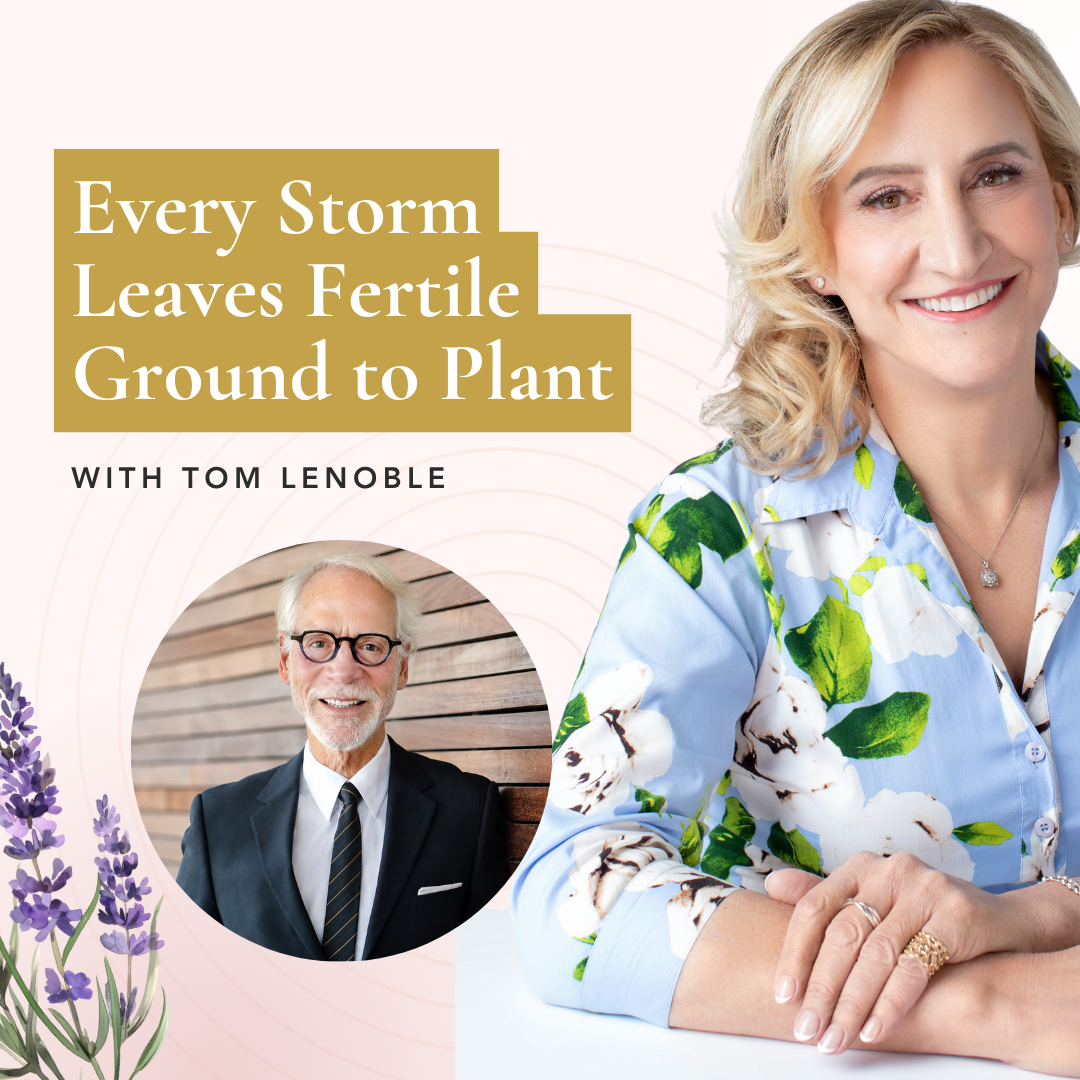
There is a photograph Tom LeNoble keeps in his memory of Maui after the storm. All that rain, and then the sun on the wet ground. He has a way of holding that picture and turning it into a question he asks the people who come to him. What the storm does, he says, is make fertile ground. The storms in our lives do the same thing. What are you going to plant?
He calls the hardest things that happen to us “terrible gifts.” A relationship that ends. A pet that dies. A disaster we are sure we will never get over. Terrible, he says, we would not wish them on anyone. And then, in a month or a year or five years, a gift comes from it. He speaks from a life he has lived all the way down and back up again, more than once.
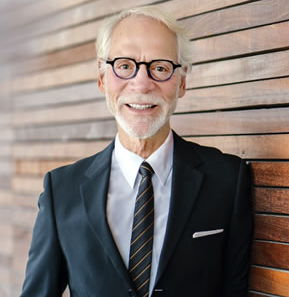
Tom is a confidential advisor to founders, executives, and nonprofit leaders. He is the CEO of the Academy for Coaching Excellence, twenty-four years old now, training coaches around the world. He wrote an award-winning bestseller called My Life in Business Suits, Hospital Gowns, and High Heels. He hosts his own podcast, Opening Pathways. And above all of it, he names himself a philanthropist, though not in the way most people mean that word.
“I retired being retired to be inspired,” he told Katherine, near the beginning. It is the kind of line he offers with a smile, and then it turns out he means every syllable of it.
The varmint in the shack
He grew up in a one-bedroom house in Florida that his grandfather built, and the family called it “the shack” with real fondness. His brother and he shared the bedroom. Their parents slept in the living room, though nobody called it that. There was no hot water; his father boiled vats of it on a kerosene stove, and there was a pecking order to the baths. Being the baby, Tom was last, except on his birthday, when he got to be first. There was no refrigerator, just a block of ice carried home each day. And there was a lot of love in that house.
He was five when he came home from his first weeks of school and understood two things at once: that his life was going to be different from the one he was living, and that he himself was different. Curious past the point of caution. His grandfather took one look at the small boy exploring every corner of the old house and shouted that there was a varmint loose, and the name stuck for life.
Katherine met him there. She told him about crawling out of her own crib as a child, hunting for the man she was sure lived inside the radio. “My nickname was Varmint,” Tom said, and for a moment the two of them were the same curious child in two different humble houses.
The curiosity got him into trouble and it also carried him. A bullied boy who was called a sissy, he puzzled his way through, once trading his daily brownie for the protection of the tallest girl in fifth grade. He found his people in the drama club, an international thespian back on a stage. And he was drawn, early, toward the care of others. He tended his dying grandmother as a teenager because there was no one else to do it. He volunteered where he was spat on, and kept volunteering.
The virus in the rearview mirror
There was a decade-plus corporate career, real and remarkable: MCI, walmart.com, Palm, and then a phone call from an unknown little company called Facebook, an interview with a nineteen-year-old Mark Zuckerberg in an office above a Chinese restaurant, and the setting-up of that company’s first customer operations. He did all of it while gravely ill.
In San Francisco, after his brother had died of AIDS in Ward 86 in 1985, Tom went to an anonymous clinic and waited seven long days for a result he already suspected. When the woman began her careful script, he asked her only for the answer.
“”A smile given without expectation, a moment of real presence offered freely, Tom calls that a philanthropic gesture. Generosity, he says, doesn’t require a checkbook. It just requires you to show up.””
Then he started the car and drove back to work.
He has been told he had six months to live three times. He is in his thirty-seventh year with HIV, and he has lived fourteen years with metastatic cancer. Each time the sentence came, he says a small voice crawled up and whispered in his ear: watch this.
The hub of the wheel
During AIDS, and again with cancer, Tom built something he calls the healing wheel. Picture a wheel with spokes running out to Western medicine, Eastern medicine, acupuncture, massage, and on and on. He was the hub. He learned enough to have the difficult conversations, and then he made the decisions himself. His current oncologist calls him a clinical trial of one.
Out of that came the work he does now. He advises leaders on resilience, which he refuses to treat as a pose of toughness. Resilience, he says, is a muscle, like a bicep, that you use to get stronger. His keynote Living Fully While Dying moves through three phases: living fully without regard to dying, living fully while being told he was dying, and living fully knowing he was dying all along.
And there is the philanthropic mindset. People kept telling him they would be philanthropists one day, when they had the money. It made him ask what the word really meant.
“your smile, a hello, sitting with someone that’s in need or in pain is a philanthropic gesture. You don’t have to have your name on a building, write a check or go to a gala.”
The only condition is that you give it without expectation of anything in return.
Tie the knot, and never tie it for someone else
In 1985, standing in Ward 86 where his brother was dying, Tom saw a framed poster on the wall: a rope with a knot at the end of it. If you feel that you’re at the end of your rope, tie a knot and hold on. It was the first time he had seen the line, and it never left him.
He carries it now as a discipline about other people. When someone is at the bottom of a hard passage, the answer is often obvious to the one watching. It is not obvious to the one inside it. Tom will hold their hand, encourage them, lift them up until they can reach the knot themselves. He will not tie it for them.
He calls this the Haystack method. He believes people have their own answers, like a needle somewhere in the hay. His job is to hold the space so a person can clear the hay away and find the needle that was always theirs.
Katherine gathered his qualities and read them back to him: fiercely curious, inventive, expressive, sensitive, courageous. Like an artist, she said. Tom stopped. Everything she had just named, he told her, was exactly what he had used to make his whole life happen. No one had ever handed it to him that way.
What his life is asking us to see
Katherine has her own word for what Tom calls a terrible gift. She calls it a collapse: a moment that breaks a life open, where you have a choice to cope and mask it, or to surrender and sit with it. In that surrender, she says, we find our next calling. Two people describing the same weather from two windows.
The philanthropist and the artist turn out to be the same man. The essential self Katherine speaks of, the innate energy each of us is born with, was there in the five-year-old who knew he was different, in the varmint exploring every corner. It was there in the young man who reclaimed himself and set out to find what he was for. Service was always at the centre, and the storms only cleared more ground for him to plant it in.
Fear, he says, is an opportunity for growth. He asks us to be here now, because we got up this morning and some people didn’t. And when we meet someone who has not yet found the strength to tie their knot, he asks that we hold their hand rather than reach for the rope ourselves.
His wish for the world is that we remember horrible things have happened before, and that we survived them. That we thank the housekeeper with her dust mop as readily as the general manager. We are all far more the same than we will ever be different, and none of us is meant to plant the fertile ground alone.
Thirty-seventh year in, still here, still planting, Tom keeps asking the one question the storm leaves behind: what are you going to plant?
This is the kind of leadership our moment requires.
It is the kind of leadership Sincerely was built to honour.
A few hours with Tom
This is a long, unhurried conversation, and it moves the whole arc of a life, from a shack in Florida to a chair where he now holds the space for others. Tom tells his story with humour and a startling openness, and Katherine receives all of it. Pour something warm and settle in.
There is no hurry. The library is always here.
Three lines I carried home
“What the storm does, just like the storm from the sky, is creates fertile ground to plant. The storms in our lives create the same fertile ground. When I ask people, what are you going to plant?”
“I believe people have their own answers. It’s like finding a needle in a haystack. My job is to hold the space so they can clear away the hay to find their answer, the needle.”
“if you feel that you’re at the end of your rope, tie a knot and hold on.”
(A line from the poster on the wall of Ward 86. Tom has carried it ever since.)
About Tom LeNoble
Tom LeNoble is a confidential advisor to founders, executives, nonprofit leaders and professionals, and the CEO of the Academy for Coaching Excellence, a coaching academy of twenty-four years that trains coaches around the world. He is a professional speaker and the host of the podcast Opening Pathways. His memoir, My Life in Business Suits, Hospital Gowns, and High Heels, is an award-winning bestseller. Before this chapter he led customer service and operations at MCI, walmart.com, Palm and Facebook. He names philanthropy his real mission, teaching what he calls the philanthropic mindset and supporting underserved communities, youth in the arts, first-generation students, and women’s issues.
Find Tom: [website PLACEHOLDER] · [Academy for Coaching Excellence PLACEHOLDER] · [LinkedIn PLACEHOLDER] · [book PLACEHOLDER]
Please stay.
Don’t just visit. This home is yours too.
There is a room here for you. It has always been here, waiting.
Once a week, you’ll receive a letter. Reflections from me. Sincerely recommendations. Small stories worth sitting with. Quiet offerings for the path, written for people who want to live a more gentle, bright, and honest life.
You’ll be the first to know when new conversations arrive on The Sincerely Show. When gatherings are announced. When the doors of Maison Millefleurs open for retreats.
The door is never locked. We’ve been preparing your room for a while now.
This conversation is for reflection and perspective only and should not be relied on as therapy or professional advice. Please seek qualified support where needed before making any decisions based on the information you learn through this conversation. This content is also subject to our full Terms and Conditions, which you can review on our website at sincerelyinc.com.