The living archive of human becoming.
Bright, honest, human stories of people finding their way home. Gathered here so you can find yourself in them. So you have a soft place to land when the world feels too fast. So you feel less alone in your own becoming.
Some stories arrive through The Show: unhurried conversations where remarkable humans share how they found their way to something true.
Some arrive through The Letters: weekly reflections from Katherine, small offerings for the path.
Some are still being written. Some are waiting to be told. Some might be yours.
This collection grows every week. It breathes. It lives.
Every week, Katherine sits with someone extraordinary.
Not extraordinary because they’re famous. Extraordinary because they’ve stopped performing and started being real. Because they’ve walked through something hard and emerged softer. Because they’ve found their way home to themselves and are willing to share how.
These conversations are long. Unhurried. There is no agenda, no soundbites, no performance. Just two people being honest with each other about what it means to be human.
Listen when you need to feel less alone. Listen when you need inspiration. Listen when you want to be reminded that the gentle, sincere life is possible.
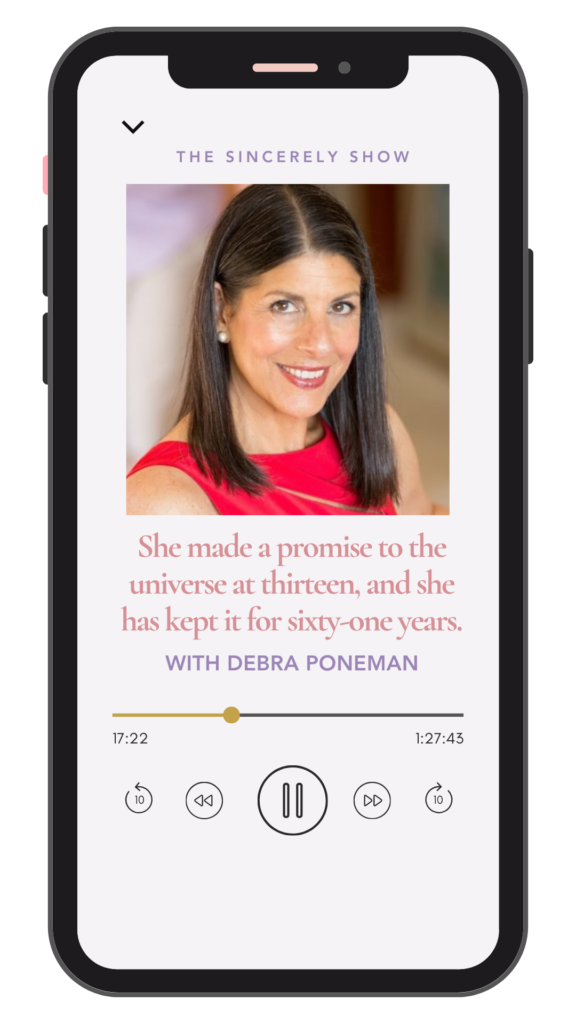
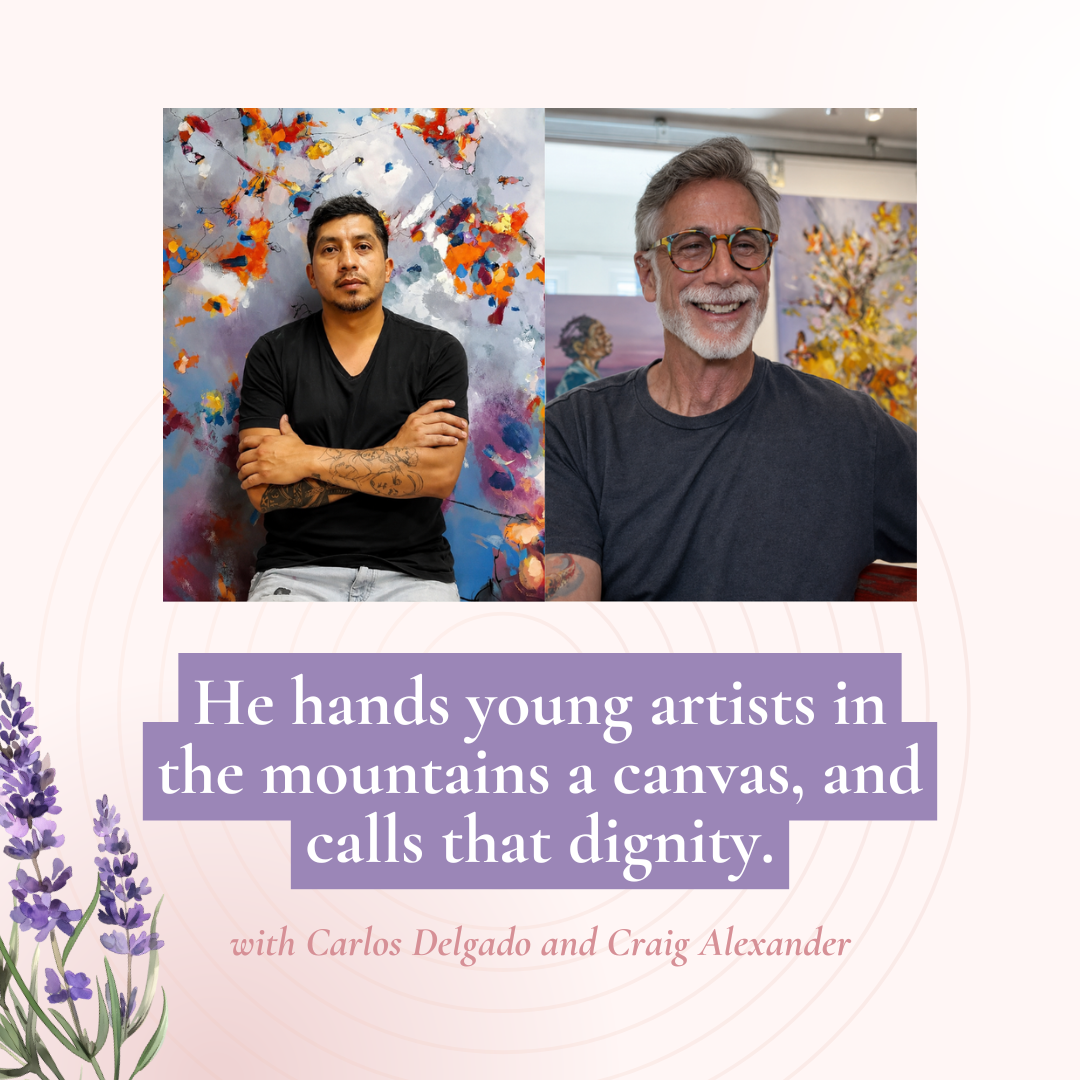
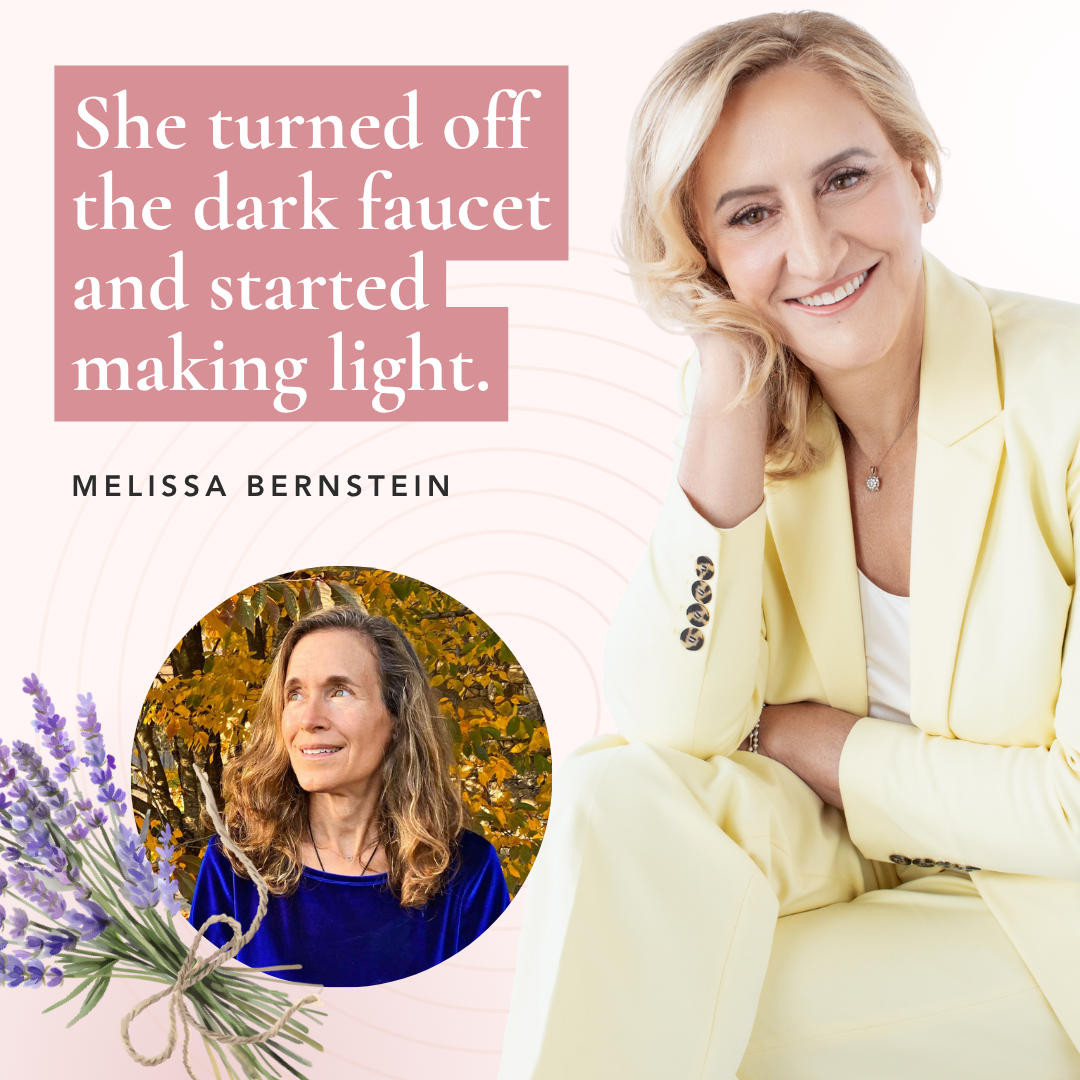
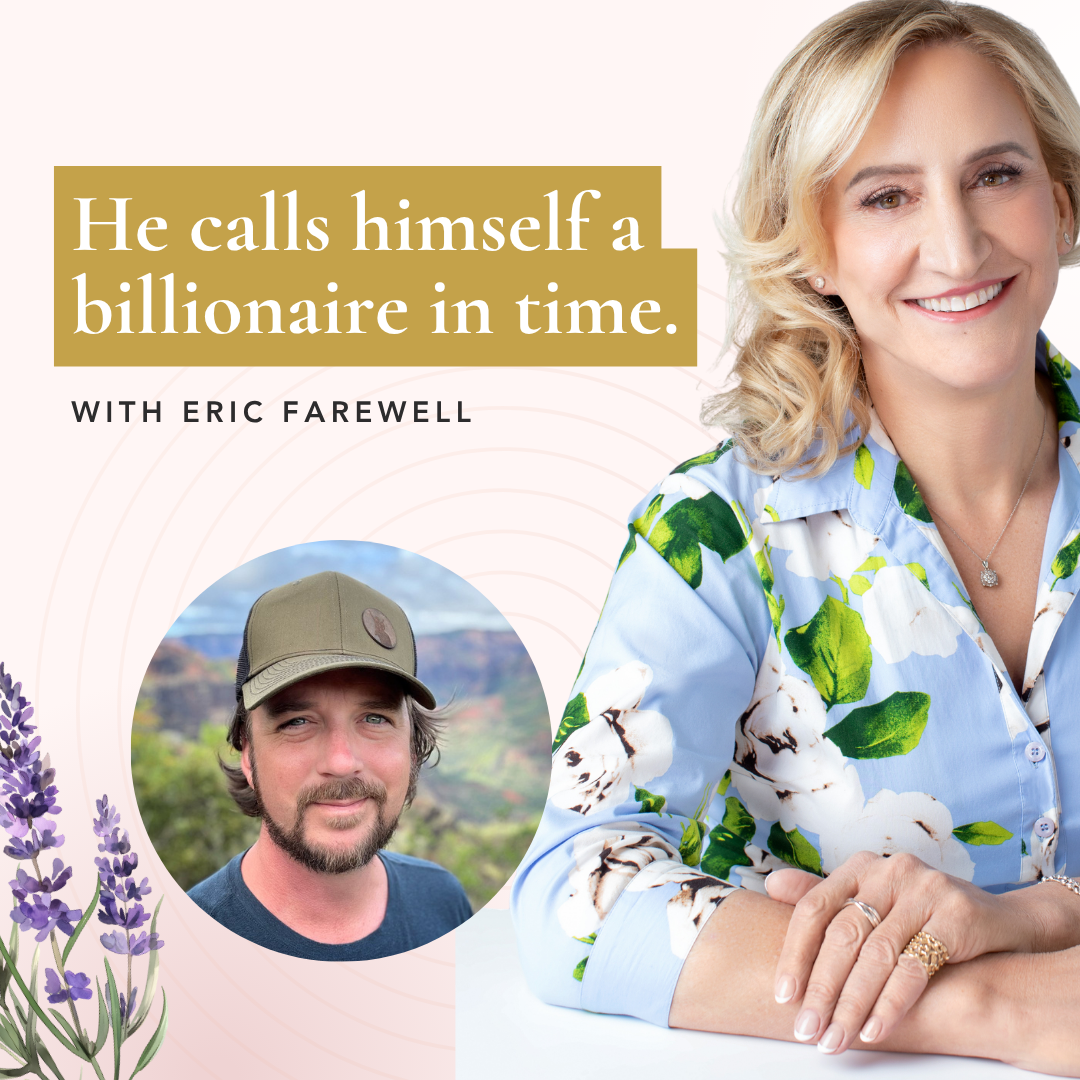

The Sincerely Show is available wherever you listen.
Once a week, Katherine writes.
Not instructions or advice. Just honest reflections on what it means to live sincerely. On what she’s learning. On what the conversations are teaching her. On the small moments that hold something true.
These letters are quiet. They arrive in your inbox like a note from a friend. They ask nothing of you except to be read, if you have the time, and to take what resonates.
I’m amazed by how music speaks to us.
For so long, I thought I had some unique challenge in hearing the words of a song. I’ve since learned that many people experience music this way, through feeling and emotion, without fully comprehending the words… that’s my experience. I’m always amazed by people who can hear a song for the first time and then sing along. For me, the feeling and sense of meaning often arrive long before I understand what the actual words are saying.
A group of us are preparing a float for the annual Pumpkinfest parade in Wellington, here in Prince Edward County. I’ve been asked to drive my orange tractor, pulling the hay wagon my friend Jo gifted to me and the farm. Our theme song is The Ballad of Peter Pumpkinhead.
I’ve always loved Crash Test Dummies… their voices and folk-like lyrics. P.S. I can sing the low and high parts, lol. When the song came up, I started listening to it again and again. It kept speaking to me. Finally, I said to myself, I have to understand the meaning of this song. And then, as often happens, its words and its meaning spoke to me so deeply.
The song was written by Andy Partridge and first released by XTC in 1992. In describing its beginnings, Partridge wondered what would happen to someone whose way of living encouraged people to be more humane, generous and loving, and why that person might threaten those in power.
I picture Peter as this quirky, redheaded, kind and humble person. Someone who loves openly and gives what he can. His generosity and honesty draw people to him, while some of those in power feel challenged and turn against him.
There is also Peter’s acceptance of love, something so simple and generous, even as others try to disgrace him.
Peter Pumpkinhead put to shame
Governments who would slur his name
Plots and sex scandals failed outright
Peter merely said
Any kind of love is alright
Yet the refrain keeps returning to the enemies he makes.
But he made too many enemies
Of the people who would keep us on our knees
Hooray for Peter Pumpkin
Who’ll pray for Peter Pumpkinhead?
Understanding the story brought me into a deeper reflection on the world we’ve created, the world we live in, and on my own life.
Peter’s humility, generosity and love are so beautiful. I find myself wondering how someone comes to live so authentically from that place. What allows us to remain open to one another, to share what we have, and to see another person’s dignity even when their life is different from our own? And why can that way of being, which holds so much possibility and truth for us, also be met with fear?
I think about our desire to care for one another, and the ways fear can keep us protecting what we know or believe to be true. I wonder how often we recognise that tension within ourselves. The moments when we feel moved to reach towards someone, yet hesitate or don’t. The times when something unfamiliar asks us to look again at what we believe. How much of our free will is impaired by fear and bias and power? Peter’s story leaves me thinking about what we might discover if we could stay kind and curious a little longer, present and open a little longer.
I think, too, about the people who have so generously shared their life stories with me through The Sincerely Show and beyond. People who have dedicated their lives to service and contribution. Most have experienced profoundly shaking, life-altering periods or moments. As I listen, I find myself wondering about the love that sustained them, the people who helped them, and how their experiences have shaped what they now offer the world. So many have shared with me how they would not wish their journey on another, how they feel spared, and how they have emerged more open, present, loving, kind and curious. More like Peter.
Over the past several days, I’ve been bringing this research together into frameworks for my advisory, speaking and teaching work. Spending time with these stories, I continue to discover things I hadn’t understood when I first heard them. I’m grateful for the space to listen, to allow my understanding to develop, and to consider how I might share what I’m learning.
Then comes the final verse.
Peter Pumpkinhead was too good
Had him nailed to a chunk of wood
He died grinning on live TV
Hanging there he looked a lot like you
And an awful lot like me!
I keep returning to this verse. The cruelty of what happens to Peter, and then the recognition of ourselves in him. It brings me back to the Peters in our lives, the people whose way of being reminds us of what is possible and deeply true within us. People we can honour and learn from, whose kindness, humility, courage and contribution stay with us.
Perhaps honouring them includes bringing more of ourselves to one another. Sharing what we have learned, what we can offer, and the love we carry.
As we prepare for the parade and the pumpkins continue to grow, I’m still listening. I’m amazed that a song chosen for our float has brought me deeper into all of this, and grateful that I have the space to be.
Grateful for all of you!!
Thank you, Peter Pumpkinhead!
I grew up on my parents’ farm outside St. Marys, Ontario, Canada.
My sister Sandra died shortly after birth. My older sister, Mona, was four years ahead of me, and my younger sister, Becky, four years behind. I had one good friend who lived a short walk from our farm, but much of my childhood was spent alone.
And I loved it.
My mother called me Snoopy because I was endlessly curious. Apparently, even as a very young child, I managed to climb out of my crib and begin exploring every corner of the house. One day, I climbed onto a chair, then onto the kitchen table, reached high up to a shelf and took down our transistor radio. I carefully took it apart because I wanted to find the man inside.
As you can imagine, I was deeply disappointed when he wasn’t there.
As I grew older, my world expanded beyond the farmhouse. I explored the trees and hedgerows surrounding the farm and every corner of the big old red hip-roof barn. I wondered about what had happened there before me and imagined the lives it had held.
Eventually, I ventured farther, across the fields to the forest about five hundred yards behind our farm. There was a creek where I caught tadpoles, frogs and minnows. Nearby were the ruins of an old fieldstone farmhouse, where I searched among broken pieces of glass and dishes and wondered who had once lived there.
When I was ten, after travelling to Germany with my father, I would take my sleigh into that forest in winter. I had bought a pair of binoculars in Germany and somehow lost them on one of those adventures. For years afterward, I kept searching for them, convinced that perhaps I had hidden them somewhere in the rafters or between the joists of the basement in my parents’ farmhouse.
I built things, too.
In the upper level of the barn, I created my own farm. Dried corn cobs became fences, while my toy tractors and trucks travelled through the fields, laneways and pathways I constructed in my imagination.
Over time, I built three or four clubhouses among the tree lines, using pieces of old barns and whatever materials remained from sheds my father had built. I made clothes for Barbie dolls out of Kleenex, imagining and creating with whatever happened to be around me.
Looking back now, I realise how much that imaginary world resembled the life I would eventually create.
Those clubhouses became, in some way, the family cottage where my children and I would spend almost thirty years. The little farm I built from corn cobs became the farm where I live today. The fields, pathways, gardens and places I created in my imagination somehow found their way into the life I would build decades later.
The child wandering through those fields, tending an imaginary world and wondering what might be around the next corner is still here. I recognise her when I walk through my gardens and the lavender, watch the bees or make something with my hands. I recognise her, too, when I find myself imagining what might yet become possible.
The forms have changed, but something essential has remained: curiosity, reflection, imagination, dreaming and the desire to create.
Perhaps Sincerely is another expression of exactly the same thing.
It makes me wonder sometimes: What is the next incarnation of this lifetime?
A life seems to contain many lives. We create worlds, inhabit them, love them and sometimes leave them behind. Yet something essential travels with us from one into the next. The clubhouse disappears, but the builder remains. The cottage eventually becomes a memory, but the love that filled it remains. A corporate life ends, yet the curiosity about people, leadership, humanity and what allows us to flourish continues.
The child is still here.
At an early age, my earliest spiritual questions emerged during those long periods of wandering and wondering. I remember thinking about humanity. I wondered about Jesus and the Second Coming. I tried to imagine God. Was God actually a being somewhere, a man looking down upon us? Was God the creator? Or was God perhaps an energy, a force, something moving through everything?
In some ways, I was doing exactly what I had done with the transistor radio. I wanted to know what was inside. I wanted to understand where the voice came from, what animated things and what was behind what I could see.
I didn’t have the language or maturity then to understand what I was reaching toward. I simply knew there was something to wonder about.
Today, I experience this creative force that some call God as something profoundly loving, beautiful and alive. I experience it within us and around us, moving through nature, relationship, imagination and creation itself. Perhaps the mystery was never something hidden somewhere inside life waiting to be found. Perhaps it was life itself.
Perhaps the curiosity, imagination, desire to create, impulse to love and longing to understand are themselves expressions of that creative force.
And perhaps that is why these childhood memories have returned to me now.
As we grow older, we learn many things about separation. We learn belonging and exclusion, approval and rejection, success and failure. We learn to judge difference and sometimes to fear it. Through absence, hurt, disappointment and the ordinary imperfections of human relationships, we can also begin to associate being alone with being unloved.
Our parents, doing the best they know how, leave and return. They become tired or anxious. They carry responsibilities, frustrations and hurts of their own. We experience these things as children before we have the language to understand them. Somewhere within us, a fear can begin to form that love may leave.
Over time, being alone can begin to feel very different from the spaciousness we once knew. It can become loneliness. Beneath that loneliness can be an even deeper fear of separation, the fear that perhaps we are not loved, or that somehow we are not loveable.
Yet when I return in memory to that little child wandering around an eight-acre farm outside St. Marys, I don’t remember being lonely. I remember being alive, curious, wondering, creating and dreaming.
Perhaps the child knew something I would spend much of my adult life forgetting, and am only now remembering.
There were periods of my adult life when I lost touch with that knowing. Through divorce, as my children grew and began building lives of their own, and eventually as I stepped away from a corporate world that had surrounded me with people, purpose and responsibility for almost four decades, I experienced loneliness. There were times when I feared being alone.
When so many of the structures through which I had experienced relationship and belonging changed, the quiet could feel like absence. Beneath the loneliness was a fear of separation. A fear of failing or being rejected. Beneath that was something even more vulnerable: the fear that perhaps, without all of those relationships surrounding me, I might somehow be less loveable.
Curiously, it was time alone that began to change this.
With more space, I began spending time with myself differently. I became curious about my feelings and emotions rather than trying to move through them or beyond them. I began listening to what they were telling me, understanding where they came from and allowing myself to experience them.
Time with self became a relationship too.
Gradually, I began to experience something I had spent much of my life seeking and receiving through relationship with others: love within myself. It did not diminish my desire for companionship, intimacy, friendship or family. It allowed me to experience those relationships without needing them to prove that I was worthy of love.
And as my relationship with myself changed, I began to see and feel connection everywhere around me.
Perhaps what I am experiencing now is a return to something the child already knew.
My children are grown and building lives of their own. There is more quiet in my days now, more time for curiosity, creativity, contemplation and expression. Increasingly, I find myself at peace in my own company.
There is something beautiful about rediscovering the parts of ourselves that existed before the world told us who and how we were supposed to be.
I see that child in myself again when I wander around the farm without needing to be anywhere. I see her when I lose track of time in the garden, imagine what might grow somewhere or make something with my hands. And I see her when a question enters my mind and I follow it simply because I want to know where it might lead.
I see her in Sincerely too. The questions are larger now, but perhaps the impulse is exactly the same. What does it mean to be human? What allows us to flourish? What is love? What is consciousness? What happens when we stop trying to become who the world tells us to be and begin remembering who we already are?
The little child dismantling the radio to find the man inside has simply moved on to different questions.
When I walk outside today, apparently alone, I notice how quickly the idea of aloneness begins to dissolve.
I spend time with Joey and Maggie, two extraordinary and magnificent old oak trees whose lives began long before mine and whose presence I experience in different but equally profound ways. I walk through the lavender and hear thousands of bees moving from flower to flower. Butterflies drift through the gardens and birds call from the trees. Beyond them, Lake Ontario, the inland sea, stretches toward the horizon, infinity and beyond.
Life is everywhere.
My friends and neighbours are just down the road. I see them when I walk and on Friday evenings when I find myself at Decanter sharing a glass of wine and conversation. My children may no longer live with me, but they remain deeply woven into my life.
And those who have left this physical life are still with us. My parents, my ancestors, and friends like Ben and Richard who have passed remain present in another way. Their souls are with us. Their love remains. Physical presence changes, but love and relationship do not simply disappear.
The more present and attentive I become, the more deeply I feel my connection to the life around me. I feel it in the land and the water, in Joey and Maggie, and in the bees, butterflies and birds. I feel it in my children, family, friends and neighbours, and in those whose souls remain with us. And I feel it in the creative and loving force I spent so much of my childhood trying to understand.
Perhaps this is what time alone has given me: not an escape from relationship, but a deeper understanding of it. In the quiet, I have learned to listen to myself, to understand my emotions and to love myself more deeply. From that place, I have come to recognise how profoundly connected I have always been.
The child wandering those fields understood something before she had words for it. She belonged to the land she wandered through, to the worlds she imagined, to the questions she carried, to the people she loved and to the creative force moving through her.
And so do I.
The creative force that moved through that little child building farms from corn cobs and making clothes for Barbie dolls is still moving through me today. The loving force I once searched for somewhere outside myself is within me and around me.
The forms change. Our children grow. The worlds we build evolve. The people and places we love may no longer be part of our everyday lives, and some we love leave this physical life. Yet their souls remain with us. Love remains.
Through all of it, we remain in relationship with one another, with the natural world, with those who came before us and with the loving and creative force that moves through all of life.
Perhaps this is what I am remembering.
We were never separate.
I have never been alone.
A whole lot can change in nine years. And deep down, very little has changed. And yet, deep down, a light has been shone on what feels like everything and all that seems true.
Nine years ago, on August 25, 2017, I had a lunch that changed the course of my life. I asked one question about gender: “Who the heck is Caitlyn Jenner?” One question, yet it was the deepest question I had been sitting with for more than fifty years.
We were about two-thirds of the way through lunch when my colleague looked at me and said it plainly. Gender is who you go to sleep as, our core essence. Sexual orientation is who you go to sleep with, attraction. In that instant, I felt clarity and shock at the exact same time. You could have pushed me over with a feather.
My journey to self began in that moment. In that second of clarity.
I did not go into that lunch knowing what I wanted to do, or with some vision of another life I was trying to create. What I had was a feeling that had been intensifying within me for a very long time. A quiet longing to know myself, to understand myself, to express myself, and to somehow make sense of parts of me that I had felt since childhood and could never explain.
Today, I think about the word entelechy, an ancient Greek word. The idea that there is something within a living being that somehow knows what it is and what it is becoming before the conscious mind can name it. Something deep within us calling and quietly moving us toward fuller expression.
There were parts of myself I had judged and denied because I did not understand them, or because parents or teachers had scolded me for them. There were feelings I had learned to push away. There were parts of me that did not seem to fit easily within the life I had built or the person I had learned to be in the world. Yet beneath all of that, something remained. Something persistent. Something that would not go away. Entelechy.
That lunch became a threshold. A doorway.
Walking through that doorway opened a path to understand my gender, reconcile my gender, and ultimately affirm my gender. That was an extraordinary journey in itself. Yet the nine years since have helped me understand that August 25 was never only about gender. It opened a much larger path into myself.
I began to understand my mind differently and what I now think of as neuro-uniqueness. The intensity of my curiosity, the way I connect ideas and experiences, the way I make sense of things. The way I can feel a pattern or possibility before I can fully explain it. My need for quiet and reflection, and my love of learning, wandering, creating and discovering.
I began to see these things with more curiosity and more love, rather than constantly measuring them against some idea of how I was supposed to think or be, an idea that was taught and impressed upon me by those around me, by rules, by society.
The doorway also took me deeper into my family and lineage. Into the lives of my parents and ancestors, and into the hurt that travelled through our family through war, displacement, loss and survival. I began to understand that so much of what forms us physically and genetically begins long before we are born. Patterns travel through families. Fear travels. Silence travels. Ways of protecting ourselves travel. And so do resilience, courage and hope.
Understanding this history helped me understand myself differently. It also gave me more compassion for the people who came before me. They too were human beings trying to find their way through lives shaped by experiences and conditioning I can only partly imagine.
There was a great deal of grief in those first years of my journey.
About a year after that lunch, I experienced depression, and there were times when I was ready for life to be over. An angel saw my pain, named it and shared the truth of the intergenerational pain I would create. In that moment, I found hope in choosing to live for my children. They gave me a reason to continue.
There were other moments, too, in those early years when I collapsed under the grief. There was so much that I had held for so long and so much that I was finally allowing myself to feel. Somewhere within that grief, I surrendered. I released, curiously explored and healed.
I began to stop fighting myself. I began to stop judging parts of myself that I had denied or tried to explain away. I began to accept and embrace more of who I was.
And through that journey, I discovered something extraordinarily beautiful about human beings.
The doorway led to a hallway that showed me a deeply compassionate, caring and loving side of humanity. I experienced the love that becomes available within each of us when life, or sometimes we ourselves, create enough space to grieve, to heal, to grow and to find that love within us.
I experienced people meeting me with kindness, curiosity and compassion. And as I received those things, I began to discover more of them within myself.
It changed the way I understood leadership too.
I had spent decades leading people and organisations. I knew the systems, structures and processes of leadership. I knew what we were taught leadership should look like. Yet my own journey began to show me something different.
When we have travelled deeply within ourselves, when we have faced our own fear and grief, when we have learned to be more compassionate with ourselves, something can change in the way we meet other people. We can become kinder and more curious. We can hold more empathy. We can become more courageous because we have already walked through things within ourselves that frightened us. We can become more able to sit beside another human being without immediately judging them or trying to fix them.
The journey within humbled me. And through that humility, I found a greater capacity to hold space for others.
Over time, I began to see how kindness, curiosity, compassion, courage, purpose and a desire for a more harmonious world could become an evolved form of leadership. The power- and fear-based forms of leadership we so often learn through schools, systems and processes began to give way to something more human, the kind of leadership that can emerge naturally when we have journeyed deeply enough within ourselves to become fully ourselves.
A whole lot has changed in my life since that lunch. I experienced divorce. My children grew up and were launched into lives of their own. I moved on from roles and jobs where I had been successful and into new directions that gave more room for my curiosity, my love, my sense-making and the things that have always mattered deeply to me.
Today, I steward a home and land in the kind of place I was drawn to as a child. I walk through the gardens and lavender. I watch the bees. I make things with my hands. I learn. I wonder. I follow my curiosity. I meet beautiful people, beautiful souls.
And I experience the beauty of a human lifetime in a way I could have never understood before.
The beauty of nature. The beauty of curiosity, wonder and learning. The beauty of loving and being loved. The beauty of friendship and connection. The beauty of sitting quietly beside the water. The beauty of making something with our hands. The beauty of discovering something we did not know yesterday. The beauty of being here long enough to experience what life continues to reveal.
There was a time when I found enough hope to live for my children. Today, I have found enough love within me to live for myself and the beauty of this lifetime.
I want to be here for this life. I want to experience it. I want to love. I want to keep learning. I want to remain curious. I want to keep becoming.
Today, I feel peace. I feel joy. I feel love. I feel faith.
And the more I live from my essence, the more I notice that some things no longer carry the same weight. People, places and things that once seemed so important can fall away, while other people, places and experiences seem to draw closer because something in them resonates more deeply with who I am.
Perhaps the more we live from our essence, the more we recognise what feels true.
When I look back across these nine years, the outward change is enormous. Yet when I look deeper, I recognise so much of what has always been there. The curious child is still here. The part of me that wanted to wander, imagine, create and understand is still here. The part that sensed things deeply before having words for them is still here. The longing to know myself, to love and be loved, and to understand this strange and beautiful human experience is still here.
Deep down, very little has changed.
And yet, deep down, a light has been shone on what feels like everything.
Perhaps entelechy is not about becoming someone new at all. Perhaps it is about allowing what has always been within us to become visible, to be understood, to be loved, and finally to have a life.
I find myself wondering what doorway might be quietly waiting for you.
Nine years ago, I asked one question.
I had no idea I was opening a doorway into my whole life.
There was a phrase I often repeated when my children were growing up, usually around the dinner table after one of the inevitable disagreements or difficult conversations that come with being an imperfect parent and raising four children.
I would look at them and say,
“Kids, all you own is your name.”
I don’t remember where the words came from. I never consciously created them; they seemed to arrive from somewhere deeper within me, and over the years they became part of our family.
At the time, I believed I understood exactly what they meant. I thought I was teaching my children that their reputation mattered, that honesty mattered, that integrity mattered, that trust, once broken, is difficult to rebuild. I wanted them to understand that while life may give us many things, our character is ours to shape.
It was a lesson worth teaching.
What I couldn’t have known then was that those same words had come to teach me.
What I didn’t yet see was the fear that lived quietly beneath my own teaching, a fear of not fitting in, of being judged, of not being liked or respected. It was a fear rooted in others, in how I was seen, more than in who I actually was.
Life has a curious way of doing that.
Sometimes the deepest truths arrive long before we understand them. We speak them. We live beside them. We repeat them to others. Then, years or even decades later, life quietly reveals what they were really asking of us.
Looking back, I can see that this has happened more than once in my own life.
Years ago, I chose the name Katherine.
Some time later, I was given a spirit name: Ahna.
At the time, I didn’t fully understand the deeper significance of either. The names came first; their meaning emerged later.
When I eventually became curious enough to explore their meanings, I was surprised by what I found.
Katherine means to act and live in a way that is pure and clean.
Ahna means favour and grace, to be of service and to live gracefully.
Whether one sees that as providence, synchronicity, or mere coincidence doesn’t really matter to me.
What matters is that those words have followed me quietly ever since.
They do not describe who I am.
They describe who I hope to become, fully.
I find myself returning to them often: grace, favour, pure, clean.
Not as measures of perfection, but as gentle reminders of the life I aspire to live.
Several years ago, I was attending a leadership programme at Harvard. On the first evening, I found myself in conversation with another woman in the programme. As strangers sometimes do, we skipped past the small talk and found ourselves speaking honestly about our lives.
I told her I was writing a book called Sincerely, Katherine.
She gasped and paused.
Then she said something I have never forgotten:
“If I were writing a book called Sincerely, Suzanne… would I be proud of it? Would I be proud of the life I’ve lived? Of how I’ve lived it? Of who I’ve become?”
In that moment, Suzanne’s question was no longer about her.
It became about all of us.
Every one of us is, in some way, writing the story attached to our own name.
Carl Jung is often credited with saying that “the privilege of a lifetime is to become who we truly are.”
I have come to believe that becoming is an act of profound humility.
It asks us to keep learning, to keep letting go of what is false, and to remain teachable to what is true.
When I was younger, I thought “all you own is your name” was about protecting something.
Today, I hear those words differently.
Our name is not something to protect as much as it is something to honour.
Not through status.
Not through achievement.
Not through the opinions of others.
Through the quiet, daily work of becoming.
Everything else is temporary: our titles, our possessions, our accomplishments. They aren’t really ours.
Even the roles we play will eventually pass.
For years, that fear ran quietly beneath everything I taught, and everything I tried to become. Somewhere along the way, without my quite noticing, it began to loosen.
What has replaced it isn’t certainty.
It is release, letting go of attachment, including the material kind, and a growing understanding of what actually endures.
What endures is something much quieter: the love we give, the love we receive, and the degree to which we allow the unique essence within us, our soul, to find expression in the world.
To live from that essence as fully as possible.
From love.
For years, I said, “All we own is our name.”
Today, I understand those words differently.
What is truly ours is our essence, our soul.
The journey and gift of a lifetime is to become who we truly are.
It’s all that is truly ours…the meaning of our name.

There are rooms in this library that open only for those who choose to stay.
Behind each conversation on The Sincerely Show, there is more. Reflections from Katherine on what she noticed. The moments that didn’t make the main episode. The frameworks and models that emerged. The deeper teaching.
Katherine’s Reflection. Available to those who become
members of the Sincerely community.

A curated collection of books from guests of The Sincerely Show. Stories, insights, and perspectives to support personal and collective growth. Bringing the gift of story, lessons, and insight to help us grow and help humanity.
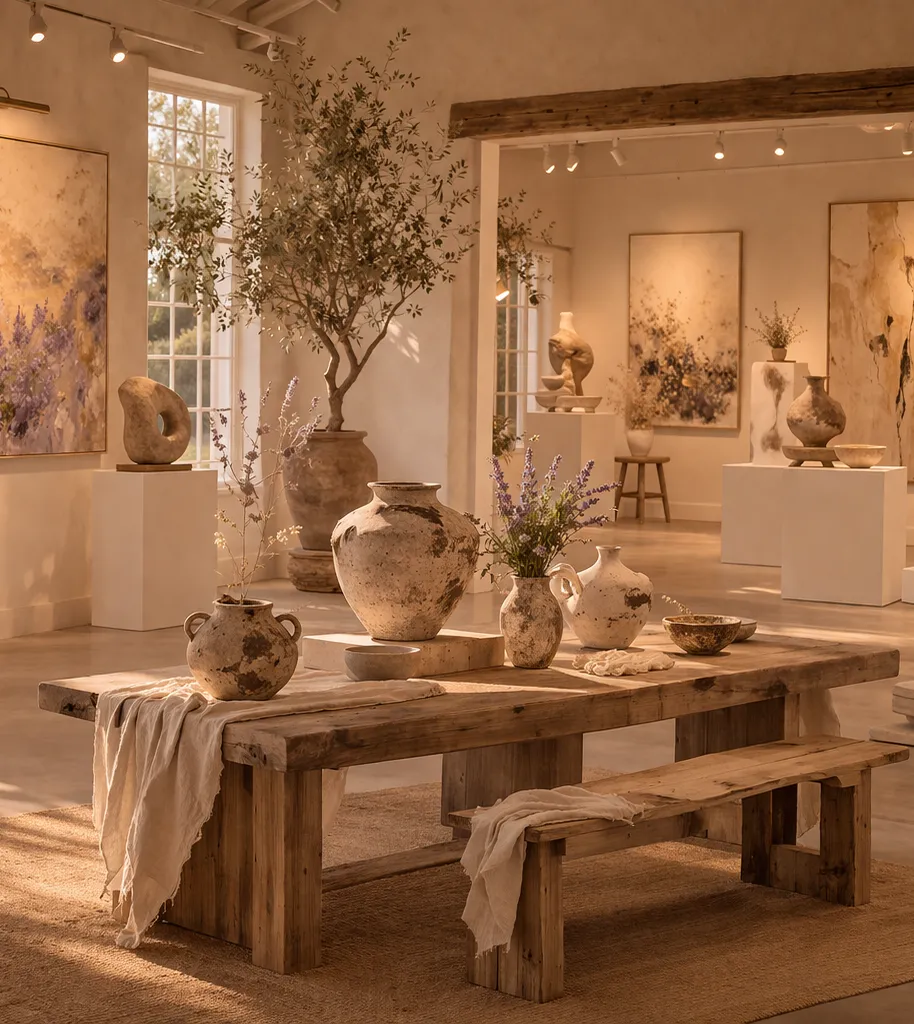
Original works from global artists using pottery, painting, and other forms to help awaken us and bring important messages to humanity.
Every week, a new conversation is added. Every week, a new letter arrives. The shelves grow fuller. The collection deepens.
And one day, this library will hold not just Katherine’s conversations, but the stories of the entire Sincerely community. Your story. The stories of everyone who has found their way home.
We are building something that will outlast us.
Come back often. There is always something new waiting for you.
The library is always here. But if you’d like the stories to come to you leave your name at the door.