She was twenty-six. She had done everything right. Oxford for a master’s. Law school. The New York firm she had identified from the outside as the precise institution she needed to pass through on her way to the State Department. She had drawn up the plan in high school, which is either precocious or unnerving depending on the day, and then she had executed it with unusual discipline. She arrived at the summer internship and she looked around and she thought: I am interchangeable with every other associate in this building.
Fungible. That was the word she used, years later, sitting across from me on this show. Her college roommate had told her she was the most organised, most driven person she had ever met, that her entire career was mapped out. And standing inside the map, she felt nothing.
She walked out. Not at the end of the summer, not after careful deliberation, but as a woman whose body had registered something her plan had not accounted for. A marriage was cracking up. She quit smoking. She didn’t know what to do. What followed, she describes as really drifting. Six years of it, between 26 and 32. A PhD she enrolled in because she couldn’t think what else to do. A professorship she would have told you she would never want.
Anne-Marie Slaughter had mapped every road in. She had no map out.
And the drifting, it turned out, was where everything she has actually built began.
The world she was made between
There is a particular quality of attention that comes from growing up between two things. Cultures, languages, ways of eating, registers of feeling. You learn early that neither world is the whole world. You learn to read rooms. You learn that what looks like normal from inside one life looks foreign from the other direction.
Anne-Marie grew up in Charlottesville, Virginia, in the 1960s, the daughter of a Virginian lawyer and a Belgian mother who had been put alone in a British boarding school during the Second World War, a small girl who spoke no English, displaced from everything familiar. Her parents met when her father travelled to Brussels on a Rotary fellowship after the Navy. He walked into a party, looked across the room, and saw a 22-year-old Belgian woman. They were engaged three months later.
In Charlottesville, the Slaughter family ate differently. Spoke differently. Her mother had a funny accent. They were half European, which was not common in Virginia in the 1960s, not in a city that was still, as Anne-Marie puts it, a long way from the kind of sophisticated, food-literate place it has since become. Every couple of years, the family would travel to Brussels for six weeks. When Anne-Marie was seven, she flew alone. They put her on the plane in Washington. Someone took her off in Brussels. And suddenly she was in a world where everyone spoke French, where dinner was served in the middle of the day with china and crystal and silver, where carrots tasted like something she had no name for. She still talks about the carrots.
There is a part of me that comes alive here in a way that just doesn’t happen at home. That is what she knew, at seven. And she knew that her friends back in Virginia had no idea this other world existed.
Her mother, who is 91 now and has been painting for sixty years, taught her children not a map but an orientation: a way of seeing. On her 90th birthday, every grandchild and child said essentially the same thing to her. You have taught me to see beauty in unexpected places. A reflection in a puddle. A patina on a light pole. The configuration of grates in a sidewalk.
Her father’s contribution was quieter and, in its way, more radical for its era. He had watched the marriages around him come apart in the 1960s and 1970s, watched the women who had put their husbands through law school and medical school left with no way to support themselves. He decided his daughter was not going to be in that position. He never told her this while she was growing up. She only found out much later, when she asked him. He laughed. He said: I wanted you to have a career. You kind of overdid it.
She knew one woman lawyer. She did not know a single woman doctor, a single woman professor, a single woman engineer. Her father’s encouragement was not abstract. It was, within his world, a form of quiet resistance.
The years that looked like nothing
The plan had been elegant. Go to great schools. Study foreign policy. Oxford. Law school. New York firm. Partner who would go to State; go with that partner. In and out career. Everything mapped.
It went well until it didn’t.
The summer at the firm was enough. She felt fungible. She couldn’t do it. And the thing about having a map that detailed, a plan that precise, is that when it stops working, there is nothing underneath it. She hadn’t planned an alternative. She had only ever planned the one thing.
I had to drift and I got a fellowship. I re-enrolled in a PhD programme because I didn’t know what else to do, but I didn’t want to teach. I didn’t have an idea. And that process for someone who had been so directed was painful.
She was, she says, doing a little of this and a little of that. She had to support herself. When people asked what she was doing, she had a twenty-minute answer.
What she came out of it knowing was this: things fall apart and you can support yourself. And the falling apart holds the door open for things you would never otherwise have considered.
She had never considered being a professor. Over three or four years of spending time around professors, particularly one law professor who became a mentor, she began to live his life vicariously. She realised she loved law. She had just never loved practising it. She loved teaching it. She was, it turned out, a person who thrived in the world of ideas. When she eventually told the people at the New York firm she wasn’t coming to join them, they said that had always been fairly evident to them. It had not been evident to her.
A law teaching job came. Then the man she had been pursuing for some time, who had always been resistant, finally saw what she had always seen. She tells this story without apology. She had known him while she was still married to someone else. After her first marriage was cracking up, she went to Paris and encountered him again, and it was like a bolt of lightning. She knew. He was used to having women fall in love with him. It took him a while to understand she was different. She had to break up with him once when she felt she was being jerked around. At some point she told him plainly: I am not going to keep pursuing you. This is your loss if you can’t see it.
He changed. They married. Thirty-three years later, they are still married.
And then, in 2009, thirty years after she graduated from college, she arrived at the State Department as Director of Policy Planning: the first woman ever to hold that position. The plan, which had been dead for years, had somehow arrived at its destination by a completely different route.
The tsunami
By the time Anne-Marie Slaughter reached the State Department, she was a figure in a particular world: foreign policy professionals and international lawyers. A relatively small, specific community. She was known inside it.
She was not known outside it.
She was commuting from Princeton to Washington each week, leaving at five in the morning on Monday, arriving home late on a Friday. Two sons. Her elder son was, as she has written about, having a very difficult time. And she was running up against the thing she had not only believed but preached to younger women for years: that if you are ambitious enough, if you manage your time well enough, you can make it all work. She had money. She had a supportive husband. She had every structural advantage. And it was not working.
She wrote the article. Nine months of drafts. The Atlantic decided to make it a cover story. The publicity team could not get her booked on radio the week before publication. Every producer thought it was same old, same old. This argument had been made in 1982, in 1992, in 2002, and here it was again.
The article published.
Four million people read it. Letters arrived from Burundi. From above the Arctic Circle. From the Middle East. Her mother called and asked what she had done. Former law students called in tears. Women told her they felt validated. Women told her she had betrayed the cause. Women her own age, who had fought for decades to get where they were, felt she had handed ammunition to every man who had ever said women would just go home to their families. She had not said that. But you write words, and they get understood differently.
It was like a tsunami hit.
She had been a rising foreign policy figure. Suddenly she was this: whatever the public decided she was. Feminist or anti-feminist. Fighting Sheryl Sandberg, which was not true. Saying women should go home, which was not what she had said.
What she had said was that the revolution was half-finished. Women were now doing the jobs men had traditionally done. They were also still doing every job women had traditionally done. Career paths and cultural norms had not changed to account for this. Something was required from the systems, not just from the women inside them.
She looks back at the article now as a fork in the road. She does not think she would have gone to New America without it.
What the Atlantic article was actually about
The book that grew from the article, Unfinished Business: Women, Men, Work, Family, published in 2015, went somewhere the article had not quite reached. In the years between writing the article and writing the book, Anne-Marie had thought a great deal about men.
Many men had written to her after the article. They said: I want to leave at four o’clock for my son’s baseball game, and I can’t. And if I try, I will be told I am not professional, not committed, not dedicated. I will be told I am less of a man.
She came away from those letters with a conviction that she has held since: the deeper issue is the devaluing of care. The economy measures competitive, individualist activity. It does not measure the part of human life that is care: the people who tend to one another, who raise children, who sit with elderly parents, who cook, who maintain the texture of belonging in a household. It does not measure family in any form, biological or chosen.
We have to value care, which is women’s traditional work, just as much as we value men’s traditional work.
This is the argument she makes now. Whole people feel the full arc of human needs: connection, care, belonging, alongside achievement and competition. The economy, as currently constructed, accounts for only part of that arc. The part it ignores is the part that is, in her reading, foundational.
She and I spoke about this before we recorded this episode and she said what she says now without hesitation: she does not think men can have it all either. The system does not work for anyone. It is not that women have been failed by a men’s system. It is that the system was built to measure and reward only one dimension of human beings, and that dimension is not the whole.
The world she is building now
New America is not a think tank. Anne-Marie is careful about this. It is a think and action tank: an organisation of extraordinary thinkers and doers who believe that ideas matter only when they become solutions, and that solutions are only real when they are tested.
The questions New America works on are large: how to fund schools without tying the quality of a child’s education to the wealth of their neighbourhood; what a genuine multi-party political system might look like in the United States; how technology can serve the public good; how to build a world order that begins with people and planet rather than with states bashing each other to see who is largest.
This last question is, in some ways, the one that was always underneath the career she mapped in high school. She wanted to do foreign policy. She wanted to work at the top of the State Department. She did. And what she saw there, and has been thinking about since, is that the international system built between 1648 and 1945 is no longer adequate. Nation states matter. She is not an advocate for dissolving them. But the system they created does not account for the world’s people or the planet they share. It was built to stop the kind of religious warfare that had bloodied Europe for thirty years. It served that purpose. It has not evolved to serve the purposes that are now required.
She is clear-eyed about what will probably be needed to change it. She does not think democratic nations will come together to build a new world order because it is the right thing to do. She thinks something catastrophic will probably need to happen first. She has seen how these inflection points work: the League of Nations came from the First World War; the United Nations from the Second; much of international law from the Cold War. She does not look forward to the crisis that is coming. She believes the ideas need to be ready when it does.
She will raise her hand. She has already said so.
What her life is asking us to see
There is a particular kind of courage that comes from having had a plan and losing it. Not the courage of boldness, which is something else entirely. The courage of continuing to navigate after the map is gone. Anne-Marie Slaughter spent six years between 26 and 32 in exactly that condition, and she carries the knowledge of those years differently from the way she carries her credentials. The credentials are real and she has earned them. But the drifting years are what she mentions when she wants to say something true.
She said to me, quietly: things fall apart and you can support yourself. I have been sitting with that sentence. The simplicity of it. The amount of experience compressed inside it. She is not speaking theoretically. She is speaking as a woman who had built her life around one plan and had to find out, in real time, whether there was anything underneath it. There was.
For anyone reading this who has ever been navigating without a map, who is in a period that looks like nothing from the outside but feels enormous from within: that period is not failure. Anne-Marie would not be what she is without hers. The drifting years were not a detour from the life she was meant to build. They were where the life she was actually capable of building became possible.
She also gave us something else. A woman who spent years arguing that the systems are failing people, who wrote the most-read piece in Atlantic history and got called every name in the opposite direction of every name she was also called, who stood in the middle of an enormous public conversation and held her position: she does not make that look easy. She makes it look like what it is. Hard, and worth it, and grounded in something that does not shift.
She says she believes in goodness. She calls it conviction, not prediction. She knows human beings are capable of the full range of what humans do. She chooses to work from the belief that the good prevails, because it has prevailed in the past, and because working from that belief is how the work gets done.
Her mother taught her to see beauty in a reflection in a puddle. Her father made a quiet decision when she was small that she would never be left without the means to support herself. She carried both of those gifts into the law firm where she felt fungible, into the drifting years, into the State Department, into the tsunami of the Atlantic article, into New America, into this conversation.
She is 67. Her parents are 91 and 94. She is still close to both of them. She says she won the parent lottery. Perhaps. But what she has done with that inheritance, the decades of work and the willingness to tell a truth that nobody wanted to hear, belongs entirely to her.
This is the kind of leadership our moment requires.
It is the kind of leadership Sincerely was built to honour.
A few hours with Anne-Marie
This is a long conversation and an unhurried one. Anne-Marie speaks carefully and warmly, and there are several moments where she pauses and changes direction midway through a sentence because she is actually thinking, not performing the memory of having once thought. You feel that throughout.
There is a section near the end where the conversation opens out into the largest questions: what will it take to rebuild a world order, whether human beings have the capacity to come together in time, what role love plays in political thinking. It is one of the most honest conversations about hope I have recorded, because it is completely free of sentimentality. She says she is not certain. She says she is convinced. She means something precise by the difference.
There is no hurry. The library is always here.
Three things Anne-Marie said I am still sitting with
Never judge your insides by someone else’s outsides. In an age of social media where only the best side is shown, there’s plenty of pain and anger underneath.
We have got a half-finished revolution, or not even half, maybe a third. And women are now, many of them doing jobs that men have traditionally done and they are still doing the jobs that women have traditionally done. And our culture and our career paths have not changed enough.
Things fall apart and you can support yourself. And that process held the door open for things that I’d never considered.
About Anne-Marie Slaughter
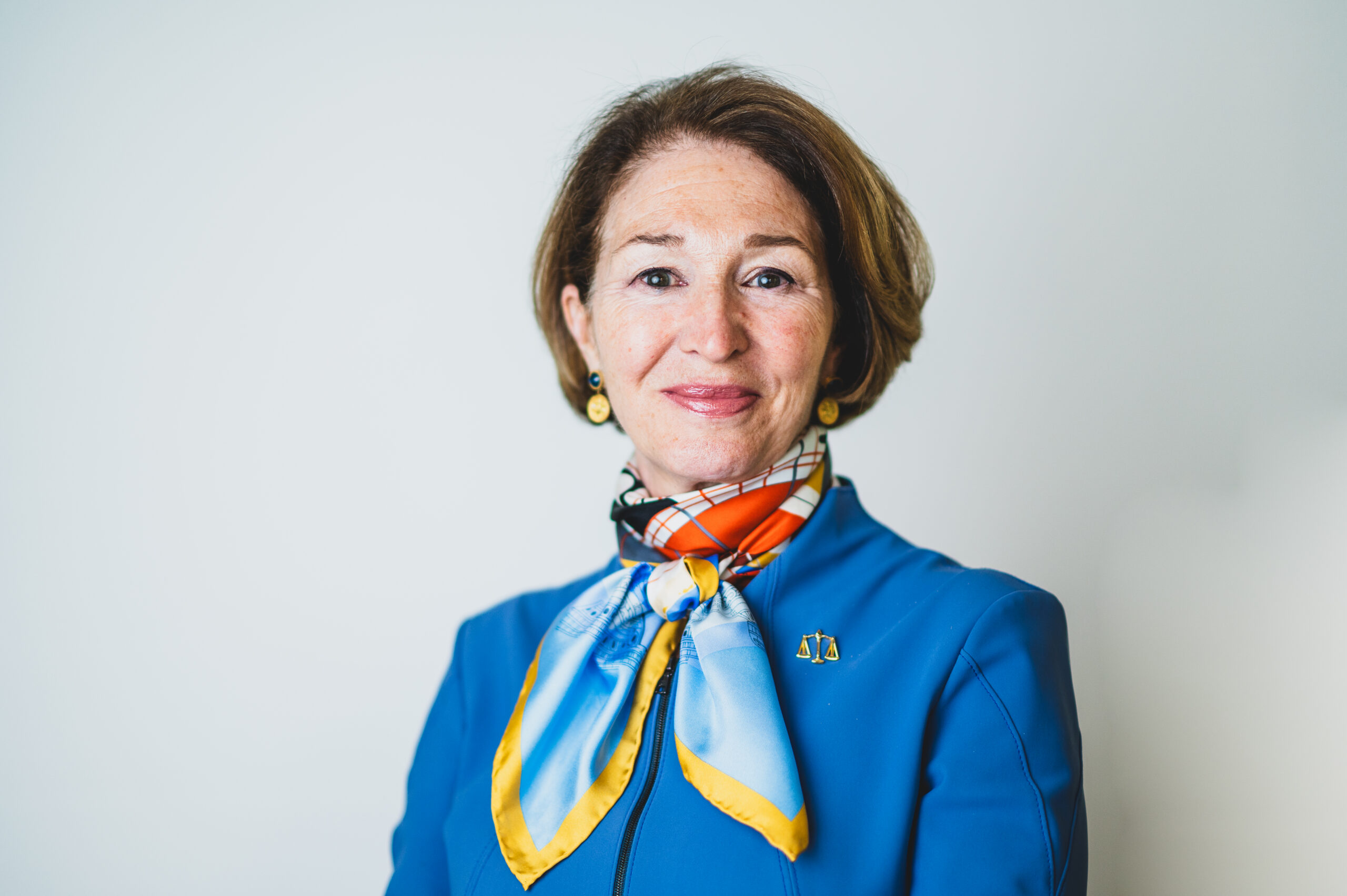
Anne-Marie Slaughter is a globally recognised scholar, policy innovator, and author of nine books. She served as the first woman Director of Policy Planning at the US State Department, was Dean of Princeton’s School of Public and International Affairs, and served as CEO of New America, the think and action tank she ran from 2013 to 2024. Her 2012 Atlantic article “Why Women Still Can’t Have It All” became the most-read piece in the magazine’s history. Her book Unfinished Business: Women, Men, Work, Family was published in 2015. She lives and works at the intersection of ideas and change.
Find Anne-Marie: newamerica.org · LinkedIn · Instagram · Unfinished Business
Please stay.
Don’t just visit. This home is yours too.
There is a room here for you. It has always been here, waiting.
Once a week, you’ll receive a letter. Reflections from me. Sincerely recommendations. Small stories worth sitting with. Quiet offerings for the path, written for people who want to live a more gentle, bright, and honest life.
You’ll be the first to know when new conversations arrive on The Sincerely Show. When gatherings are announced. When the doors of Maison Millefleurs open for retreats.
The door is never locked. We’ve been preparing your room for a while now.
This conversation is for reflection and perspective only and should not be relied on as therapy or professional advice. Please seek qualified support where needed before making any decisions based on the information you learn through this conversation. This content is also subject to our full Terms and Conditions, which you can review on our website.