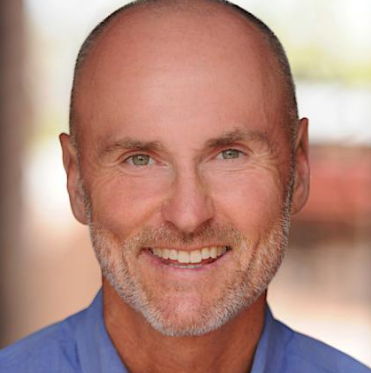
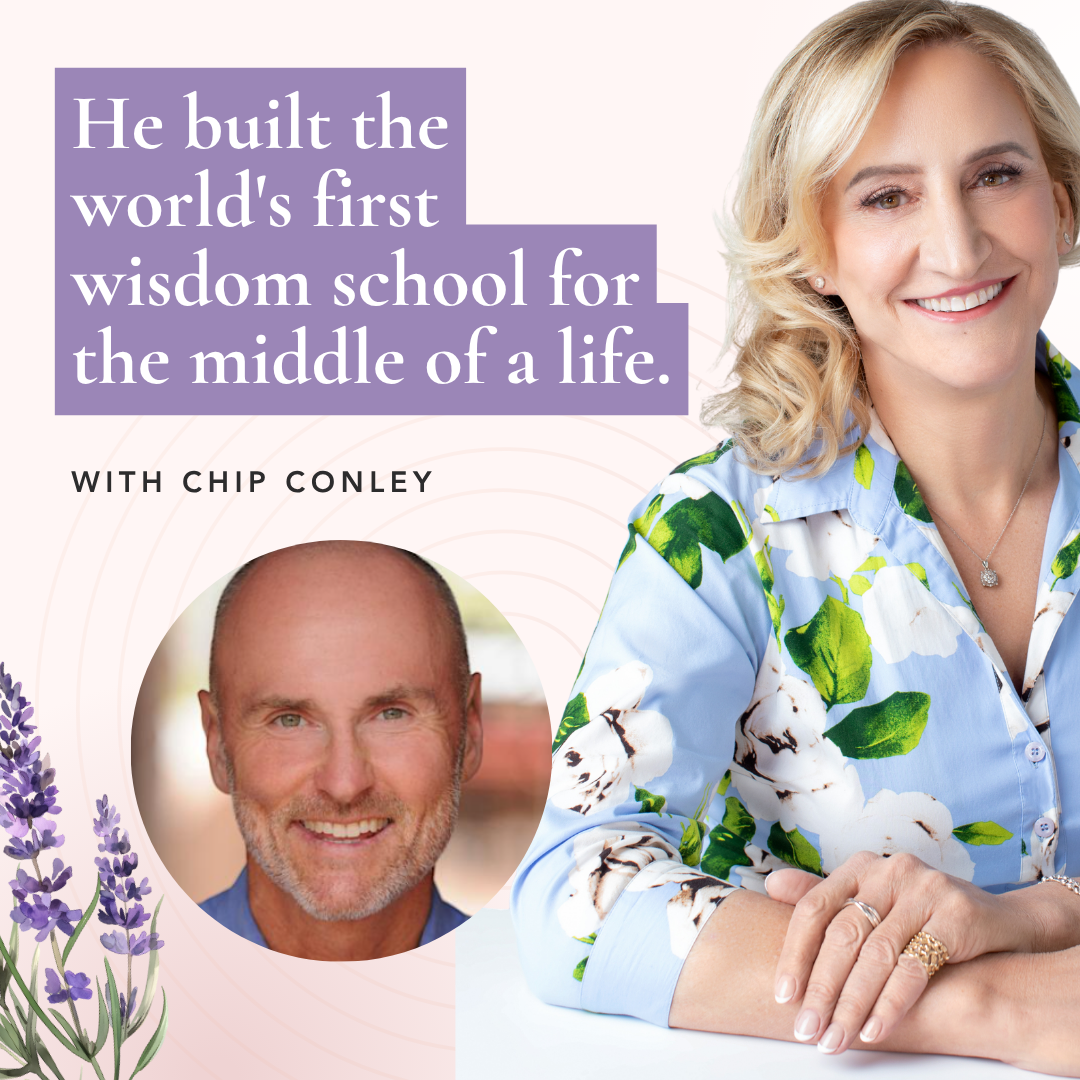
There is a beach in Baja, just south of the Tropic of Cancer, where Chip Conley used to run in the mornings. He had a home there, and a life behind him that most people would call finished and complete: twenty-four years of building boutique hotels, fifty-two of them, each with its own name. He had sold the company. He had spent seven and a half years as the “modern elder” to a set of young tech founders, learning what his wisdom was worth to people half his age.
And one morning, running on that beach, a question arrived. Why aren’t there any midlife wisdom schools? Why is there no place for people in the middle of their lives to come apart, and reconsider, and decide who they want to be next?
He calls the person he became in that season the modern elder. His own definition, borrowed from the day the Airbnb founders came to find him: “someone who is as curious as he is wise.” Older in an earned way. He answered his own beach question by building the thing that did not exist. Two campuses now, one in Baja and one on a high-desert ranch outside Santa Fe. Nine thousand people who have walked through it.
He is a father, a grandfather, and a great grandfather. He has written eight books. And he has come to measure his life by a phrase he says plainly and often: the ripple of impact.
The firstborn of two firstborns
He was the only boy, the eldest of three, the child of two firstborn Stanford parents who prized achievement the way other families prize air. As a small boy he was shy, introverted, socially awkward, with imaginary friends and a creativity he had already learned to be scared of. Around ten or twelve his parents warned him he would be sent to therapy if he did not socialise more. Therapy sounded like prison. He did the other thing. He studied people. He learned to read them, to build a bridge to whoever was in front of him.
“Very much a chameleon,” he told Katherine, “and all the while doing everything I could to achieve because I got love and sense of worth by being a great athlete.”
Student body president. All-American water polo player on a national champion team. A father who said, when Chip was still a boy, “I want you to just be a better version of me.” He was the best little boy in the world, to borrow the title he borrows for himself. He was, in his own word for it, programmed.
At twenty-two, in the summer of 1983, he walked from the Upper West Side down to Greenwich Village, knowing he would step into a gay bar for the first time. He walked into Uncle Charlie’s on Independence Day, full of fear, and something in him turned from fear to liberation. He described the shift the way Dorothy’s world turns from black and white to colour. He found community. He came out into a family that could not yet hold it, and into three years in which he could not tell his mother the truth.
The dark night of the ego
By 2007 the hole he had dug for himself was deep. He was still, in his words, an accomplishment addict, an admiration addict, running a company of thirty-five hundred people with no easy way out of it. Then the Great Recession came, and much of what he had built stood at the edge of collapse, and a stretch of grief arrived that no one should have to carry at once. And in St. Louis, an allergic reaction to an antibiotic sent him to what he calls the other side, nine times over ninety minutes.
He came back with a phrase he had earned. People say the dark night of the soul. He calls it the dark night of the ego.
Katherine took that phrase and held it up to the light for him.
“That’s profound. Cause it isn’t that it isn’t the dark night of the soul. It’s, it’s actually where you find truth. It’s where you find your essence, which is all love and light. It’s the enlightenment of soul, not the dark night of soul.”
“No, no, exactly,” he said. “Exactly.”
What was being crushed was the performative identity, the image built to survive, the thing that no longer fit the soul underneath it. In the collapse of the ego, a person finally gets to ask the real question: who am I, really?
What he found when he stopped
After the company sold, he took two and a half years of nothing much. He calls it the midlife atrium, a reframe of a line from Mary Catherine Bateson, who put it plainly: a longer life gives us a longer midlife, and a longer midlife needs light and air and space to decide how you want to curate your second adulthood. He gave himself the space. He studied emotions and wrote a book about them. He chased hot springs around the world. He was the first founding board member of Burning Man. A man who had spent his whole life saying let’s get this done, learning to sit still long enough to see what would emerge.
From that stillness came the vision he keeps closest. In one of the near-death crossings, he found himself in a great light-filled room, flying, wearing two slippers that read slow and down, surrounded by forty small birds singing all around him, telling him he must slow down to see beauty and awe. Birdsong is sacred to him now. Both campuses are full of birds. Katherine met him there, telling him of the great horned owl feathers she had found at Maison Millefleurs, and of the three hundred birds that gathered on her roof two days after a blessing of her land.
What he has actually built
The Modern Elder Academy is the world’s first midlife wisdom school. Two campuses, one in Baja California Sur and one on a twenty-six-hundred-acre ranch outside Santa Fe. Nine thousand alumni, ranging from their mid-twenties to their mid-nineties, most of them around fifty-five.
The work rests on four pillars, in his own words: “moving through transitions, cultivating purpose, awakening wisdom, and reframing our relationship with aging and longevity.” People arrive at a hinge in their lives and learn how to move through it. They dig for what they are for. They come to see the years they have lived as a store of wisdom rather than a decline. He tested it patiently, thirteen free beta workshops for friends and family before it ever opened to the public. He describes his role as pastoral, holding a field where people can find their next utility. “It’s not about being youthful as you get older,” he said. “It’s about being useful.” And the teaching itself feeds him: “A great teacher is absolutely a great learner.”
Moral beauty is contagious
Katherine asked him for his wish for humanity, into a moment she named as four existential crises: the depletion of the planet, economic divide, social fracture, and the disinformation pouring gasoline on all three.
He reached for awe. His colleague Dacher Keltner, the leading scholar of awe, teaches at the Baja campus, and Keltner’s finding surprised him. Nature is not the first pathway to awe. The first is moral beauty. Witnessing it. Being it.
“The idea that we are here to witness each other in our moral beauty, which elevates our own spirit and our aspiration for the desire to mirror that. Because our emotions are contagious and we live in a world in which the moral ugliness has been contagious.”
Katherine sat with it, and then said she was in awe of him and of his moral beauty. That is the whole practice in one exchange: two people naming the beauty they see, and each made a little brighter for the naming.
What his life is asking us to see
Chip Conley has lived what Katherine calls the spiral. Down, and then up. What he built out of it was an atrium for strangers, a place where people in the middle of a life can come apart and find their next utility, on purpose, with light and air and space. The programmed boy who learned to perform, the founder who built and built, the elder who came back from the other side with slippers that said slow down: all of it fed into the school, and none of it was wasted.
His gift is that passage he made and then held open. From the performative to the essence. From the identity a person builds to survive, home to the soul it was covering all along.
There is no arrival in this. The school is young and hard, and he is still becoming. He said he does not regret the path, because the path is true. That, more than any hotel or any book, is what he has to give the rest of us: the picture of a man who let the old identity die so the true one could speak, and then held the door open for everyone coming behind him.
When a man measures his life by the good that keeps moving outward from it, long after he has stopped counting, that is the kind of life Sincerely was built to honour.
This is the kind of leadership our moment requires.
It is the kind of leadership Sincerely was built to honour.
A few hours with Chip
This conversation runs a little over an hour, and it moves the way the best conversations do: unhurried, warm, doubling back on itself, two people recognising each other. Chip is a natural storyteller, and Katherine is a generous witness, and the hour holds both. Settle in with it when you have the time to listen properly.
There is no hurry. The library is always here.
Three things Chip said I am still sitting with
“I’ve moved from the ROI of return on investment to the ROI of ripple of impact. And that’s what gives me a sense of a high is to see the impact in small ways.”
“It’s not about being youthful as you get older, it’s about being useful.”
“The idea that we are here to witness each other in our moral beauty, which elevates our own spirit and our aspiration for the desire to mirror that.”
About Chip Conley
Chip Conley is the founder and executive chair of the Modern Elder Academy, the world’s first midlife wisdom school, with campuses in Baja California Sur and Santa Fe and more than nine thousand alumni. Earlier he founded Joie de Vivre Hospitality, building fifty-two boutique hotels over twenty-four years, and later served as the “modern elder” to the founders of Airbnb. He is the author of eight books, including Wisdom@Work: The Making of a Modern Elder and Learning to Love Midlife. A father, grandfather, and great grandfather, he teaches people to move through transitions, cultivate purpose, awaken wisdom, and reframe their relationship with aging.
Find Chip: chipconley.com · modernelderacademy.com · linkedin.com/in/chipconley
Please stay.
Don’t just visit. This home is yours too.
There is a room here for you. It has always been here, waiting.
Once a week, you’ll receive a letter. Reflections from me. Sincerely recommendations. Small stories worth sitting with. Quiet offerings for the path, written for people who want to live a more gentle, bright, and honest life.
You’ll be the first to know when new conversations arrive on The Sincerely Show. When gatherings are announced. When the doors of Maison Millefleurs open for retreats.
The door is never locked. We’ve been preparing your room for a while now.
This conversation is for reflection and perspective only and should not be relied on as therapy or professional advice. Please seek qualified support where needed before making any decisions based on the information you learn through this conversation. This content is also subject to our full Terms and Conditions, which you can review on our website at sincerelyinc.com.