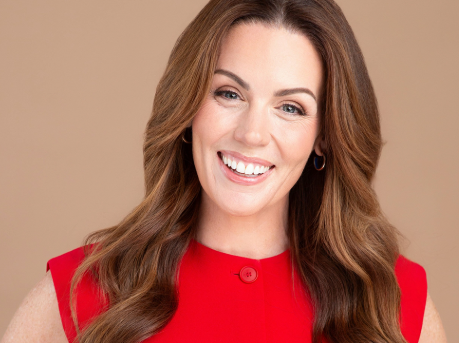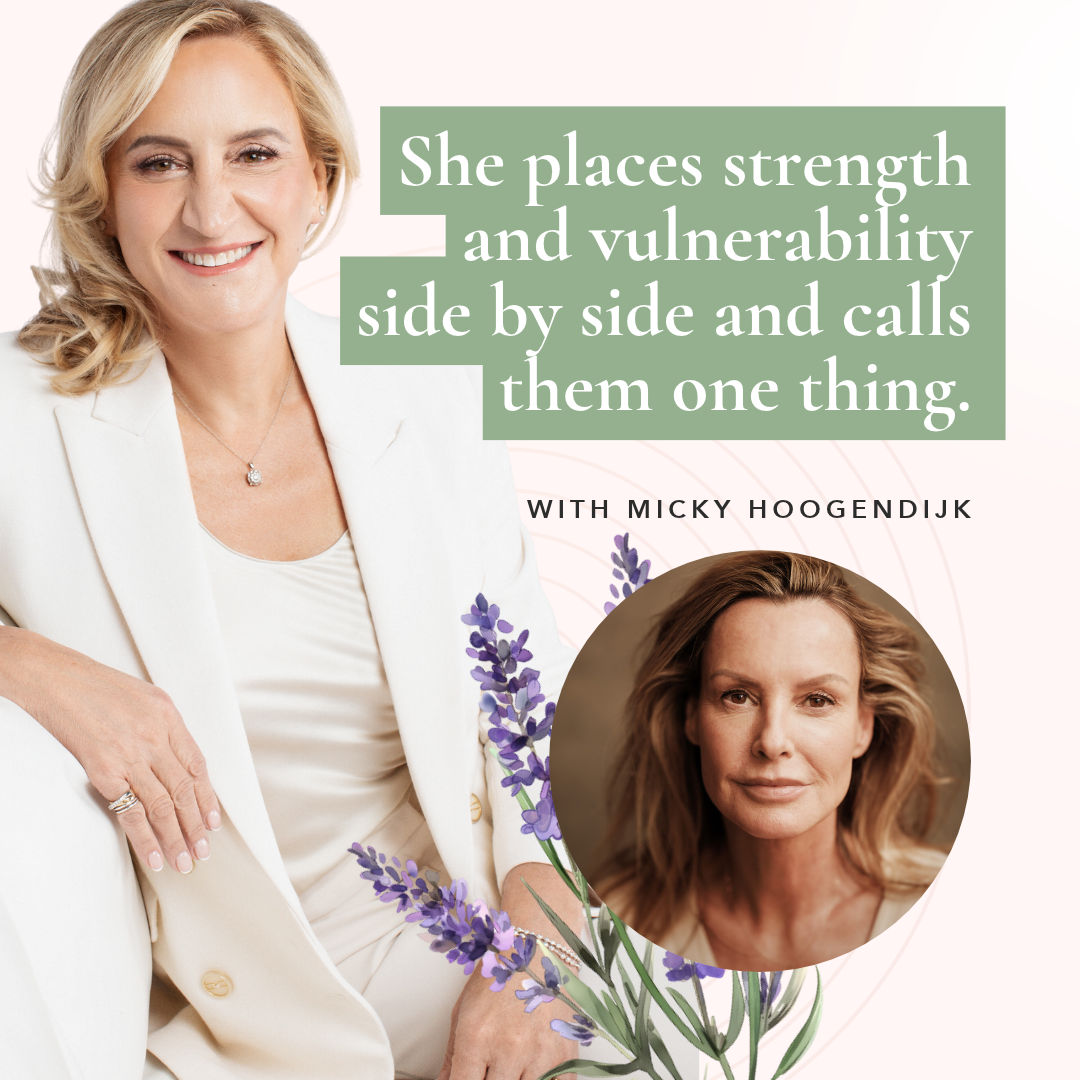

She could not see anything. The car had gone off the road, down the embankment, through the ice, and sunk fifteen to twenty feet into the Otonabee River with her inside it. The seatbelt would not release. The door would not open; the water pressure had already begun to crush the frame. She worked her fingers into the seam where the window met the door, pulled it off its tracks, slid it down, and swam out into darkness so complete she had no way to know which direction was the surface.
She exhaled.
The bubbles rose. She followed them, swimming toward her own breath, up through the black water, until her face hit ice. She was downstream now, pinned beneath sheets of it, the current pulling at her winter coat, her boots, everything heavy and cold and dragging her back. She clawed toward the middle of the channel where the ice thinned. Every time she tried to pull herself out, the ice cracked and she fell back in. Her palms were bleeding. She held on.
A man named Joseph had seen the tyre tracks in the snow and pulled over. He fashioned a piece of wood into the shape of an axe to spread his weight, crawled out across the ice, and slid her a chain. He was later awarded the Governor General’s Award for bravery, the highest honour a Canadian civilian can receive for risking their own life to save a stranger.
Robyne Hanley-Dafoe woke up in hospital thinking not about what she had survived, but about what she owed. You’re here. Do right by it. She has been doing right by it for thirty years.
The girl who felt the world differently
Robyne grew up in Ontario in what she describes simply as the best childhood you could hope for. Two parents who loved hard and showed up. Security, structure, sports. A life that looked, from the outside, complete.
From the inside, from as early as kindergarten, she felt the world differently. She ached when her mother dropped her off at school, clung in ways her peers didn’t, felt things with an intensity that nobody around her had the language for. The word ADHD was not applied to girls like her in those years. The word neurodivergent did not exist in that classroom. What existed was the experience of being pulled from her mother by teachers, of feeling separate in a crowd, of emotions that arrived bigger than the room could hold.
She carried that intensity into high school and it made her, in her own word, susceptible: to rejection, to the wrong crowd, to the particular shame of struggling in a life that looked like it should be easy. A grade-eight teacher told her, in front of her classmates, that she was not smart enough to finish high school. She says she believed that person. And from grade eight onwards it was, in her words, an absolute free fall.
She dropped out. She was dealing with addiction and self-harm and a family who loved her helplessly, who would go to the ends of the earth for their daughter and could not get to where she was. She was institutionalised at sixteen in an adult psychiatric facility, simply because no one knew what else to do to keep her safe. And she was ashamed, deeply ashamed, that she was struggling at all. Her life had every ingredient for happiness. She could not account for the darkness.
This is the part of the conversation that Katherine holds very carefully. Because this kind of darkness is not dramatic. There is no visible wound, no obvious cause, no single story to point to. There is simply a pilot light going out. A vast black hole where possibility used to be. Robyne could not imagine herself at eighteen. She could not wish-cast a year ahead. And beneath the darkness, a quiet inner voice told her that her family would be better off without the weight of her.
She was sixteen. She was still a child, holding something no child should have to hold alone.
What her mother saw
Sitting with Robyne in that facility, Robyne’s mother did something that neither minimised nor drowned in the swamp of despair. She did not argue. She did not reassure. She said: let me share with you what I see for you.
And then she described it. She told Robyne that she would be an amazing mother. That her capacity for compassion would change the game. She spoke over her daughter the future she could already see, the one Robyne could not see for herself. And Robyne, who respected her mother deeply even when she could not feel anything else, made a decision. She would borrow that belief. She did not feel it. She did not see it. But if her mother believed it, she was willing to fight for it.
I borrowed her belief until I could find my own. And it was enough to fight for.
There is a distinction Katherine draws in this conversation between empathy and what she calls true empathy, and Robyne’s mother is the proof of it. Empathy sits with someone. True empathy sees the soul when the person cannot see it themselves. What Leslie Hanley-Dafoe did in that facility was not comfort. It was witness. She held an image of her daughter’s future with such clarity and certainty that Robyne could lean against it like a wall.
Years later, Robyne’s mother told her something she had kept to herself for a long time. Before Robyne’s dark season, her father, a television producer, had been taping an interview with a woman from the Catholic diocese. Her mother had gone along and found herself drawn to this woman. The woman had pulled Leslie aside. She said: there will be hard times for your daughter. But don’t lose faith. She will make it through. Leslie had held that message quietly through everything that followed, and it had been part of what made it possible for her to show up, day after day, steady and certain, when her daughter was not.
Robyne got sober. She re-enrolled. She was getting ready to step back into her life.
And then she drove into the river.
What the bubbles taught her
She says it is not lost on her that her hope book comes out thirty years to the day of the car accident. Some things are too precise to be coincidence.
What she discovered in that river, fifteen feet underwater in the dark, was not courage in the inspirational sense. It was something more pragmatic and more profound: she had only what she had, and what she had was enough. Her mother had always told her she could figure things out. Step by step. So she looked at what was available. She could not open the door. She could pull the window off its tracks. She did. She swam out. She could not see the surface. She could exhale. She did. The bubbles rose. She followed them.
She did not know which way was up. But she knew that bubbles rise in water. She moved toward the one thing she knew to be true.
A Navy SEAL commander named Mark Devine told Robyne something at the start of this year that she says dropped her to her knees. After hearing her story, he said: do you know that you made yourself saveable that night? He meant it technically; most people, he told her, would not have gotten out of the car. But Robyne has been sitting with the phrase differently. Making yourself saveable. Getting yourself to the point where help can reach you. Being willing, when you have almost nothing left, to follow what you know toward the surface, so that the Joseph waiting at the edge of the ice can do the rest.
She woke up in hospital with her mother beside her and knew, without equivocation, that she had been spared. She had watched teenagers she’d known die in the same circumstances she had survived. She felt no survivor guilt. She felt a calling. You’re here. Do right by it. She says it was less obligation than vocation. The work was there. She had been given time to do it. Now get to work.
The work she has built
What followed was years of methodical construction. Correspondence school to finish her high school diploma, because she was too raw to go back in person. College at St. Lawrence in Kingston, the only school that would take her with her mishmash of transcripts. They took a shot on her. She got the reps in: showed up, put in effort, discovered that school, given the right supports, was not nearly as difficult as the social world had been. She did her first undergraduate degree. Then a second. A master’s. Then, much later, her doctorate at Western.
Almost two decades as a university professor, teaching and researching human resilience. And then, in 2019, a deliberate step away from the academy to take the work somewhere it had not been: directly into the hands of the people who needed it most.
She has delivered more than 2,000 keynotes worldwide. Her first book, Calm Within the Storm: A Pathway to Everyday Resiliency, introduced her framework for what it actually takes to keep showing up when life is hard. Her second, Stress Wisely, addresses what she found as a through-line in her research: that stress, understood and channelled correctly, can be an ally rather than an enemy. Her third book, on hope, arrives thirty years after the river. She describes it as the natural conclusion of everything she has studied, and the most urgent thing she knows how to offer right now.
She trained as a behaviourist, which shapes how she sees everything. She looks at habits, routines, rituals. She asks what practices allow people to stay well while doing the work that matters. Her ADHD, which she describes with genuine joy as the biggest gift, lets her take in vast amounts of information and find the simplest through-line. She is a knowledge translator: someone who takes complex science and makes it accessible to the person standing in front of her who is tired and scared and still trying. The three puppies causing a ruckus in her studio during this recording are not a distraction. They are exactly the point. She lives the whole thing at once.
Why the helpers need this most
Katherine names the four existential crises of our moment in this conversation: Social Fracture, Economic Fragility, Planetary Breakdown, Information Collapse. They are not metaphors. They are the actual conditions inside which the people who show up for others are trying to hold the line. And the fourth, Information Collapse, is what Katherine calls the gasoline on the fire of the other three: a world in which truth is no longer anchored, in which disinformation accelerates faster than wisdom can catch it.
Robyne says something in this conversation that will sit in the chest of anyone who has spent years trying to be useful in that world: the helpers are tired. The people who care most, who give most, who have been showing up heroically for others through pandemic, through political fracture, through the particular grief of watching the world become stranger and harder, are running low. And the world does not stop needing them.
She names something that I suspect many of us have not admitted out loud: that getting our hopes up right now feels dangerous. That it is actually easier to expect the worst and be pleasantly surprised, and that the body processes its resources completely differently in a state of hope compared to a state of fear or despair. The aperture of how we see the world changes when we are in a place of possibility. Hope, in her research, outperformed mindfulness during times of adversity. Co-creating bright futures in community, sitting with someone and asking what are you hoping for right now, and may I hope with you, produced measurable effects that mindfulness, for all its gifts, did not replicate under extreme conditions.
This is not sentimentality. It is science.
The practice she offers is intentionally low to the ground. Gather people. Ask what they are hoping for. Hold it with them. You do not need to fix anything. You do not need to know the answer. You need to stay in the room and say: I will hope alongside you until you can hold it yourself. Borrowed belief, expressed in community, scales in a way that individual inner work cannot. Her mother held hope for Robyne when Robyne had none. Joseph held his body on the ice so Robyne could hold on long enough to be pulled out. The image is not complicated. The image is very old. We walk each other home. She says this quoting Ram Dass, and she means every word of it.
What she learned after loss
Robyne lost her mother in 2012, at thirty-three. She says she had not yet hit her stride of true service. Things were better than they had been, but the fullness of what she was meant to do had not yet arrived.
Losing the person who had been her anchor, the only person from whom she could receive, sent her into a grief that was also a recognising. She realised, sitting with the loss, that in the thirty-three years they had together, her mother had been preparing her to live without her. The skills. The empathy. The capacity to see the person underneath the label, the behaviour, the fear. All of it had been given to her by a woman who knew she would not always be there to hold the belief herself.
Everything Robyne has built since, the research, the books, the work with military families and healthcare workers and school systems across the world, came from a woman who sat in a psychiatric facility and refused to see her daughter as broken. Who described a future with such specificity and conviction that her sixteen-year-old daughter, who felt nothing, was willing to fight for it.
I know what it feels like to have somebody show up for you without the judgment. And at the end of the day, we’re just walking each other home. My mom walked me as far as she could. Now I get to help other people on their walk.
What their life is asking us to see
There is a particular kind of person this conversation is for, and I suspect you know if you are one of them. You have been the helper. You are the person others come to when they cannot find their own way through. You have sat with people in hard seasons and tried to see clearly enough for both of you. And somewhere in the last few years, quietly and without much announcement, your own pilot light has started to flicker.
Robyne’s story does not ask you to compare your suffering to hers. She would be the first to resist that. She has never believed that because she survived something, you must be able to survive yours in the same way. What she offers is quieter and more specific: evidence that borrowed belief is real. That hope does not have to originate inside you to work. That if one person in the room can hold the image of your future with enough certainty, you can lean on that until you find your own.
Katherine shares something of herself in this conversation that deserves its own quiet moment. In the autumn of 2018, she had a plan. Her life was, by every external measure, full: marriage, four children, a long corporate career. She had arrived at a place where she genuinely believed her children would be better off without the weight of her. A friend named Leanne said nothing prescriptive and nothing comforting. She asked a single question: would you like me to send you the intergenerational trauma research resulting from suicide? And in that moment, the plan cracked. Because Katie’s hope, in the season that followed, was not yet about herself. It was about her children, about their futures, about refusing to pass the darkness forward. It was borrowed. It was external. It was enough to begin.
Hope does not need to be whole to work. It needs to be present somewhere in the room.
For anyone reading this who has been carrying something in the dark for a while: you do not need to know which way is up. You just need to exhale. The bubbles will rise. Follow what you know to be true, step by small step, toward the thinner ice in the middle of the channel. And trust that there is a Joseph somewhere, watching the snow, who will see where you went.
Robyne spent thirty years building something from the material of her own survival. She did not prettify it. She did not rush past the dark parts to get to the after picture. She made herself saveable, as many times as it took, and then she turned around and held the chain for everyone who came after her.
Her third book arrives thirty years to the day she swam out of that river.
This is the kind of leadership our moment requires.
It is the kind of leadership Sincerely was built to honour.
A note on this conversation
This episode runs just over an hour and moves, as most Sincerely conversations do, between the deeply personal and the professionally specific. Robyne is warm, funny, precise, and at one point genuinely moved. The three puppies are a recurring presence. The conversation is one of the most complete portraits the show has produced of what it looks like to build a life out of the hardest material, with honesty and without performance.
There is no hurry. The library is always here.
Three things Robyne said I am still sitting with
I borrowed her belief until I could find my own. And it was enough to fight for.
Hope is not a feeling. It is a practice. And it can be built, maintained, and borrowed from someone who holds it for you when you cannot hold it yourself.
Getting our hopes up right now is a form of being heroic. Because it is scary to get our hopes up. But the body processes its resources very differently when we are in a state of hope versus a state of fear or despair.
About Dr. Robyne Hanley-Dafoe
Dr. Robyne Hanley-Dafoe is an award-winning educational behaviourist, globally recognised resilience and hope researcher, and bestselling author based in Ontario, Canada. She spent nearly two decades at university researching human resiliency before stepping away from academia in 2019 to bring research-informed practices directly to organisations and communities worldwide. She has delivered more than 2,000 keynotes and written three books: Calm Within the Storm, Stress Wisely, and a forthcoming work on hope. She is a mother of three teenagers, a lover of trivia, and the woman who followed her own breath to the surface of a frozen river.
Find Robyne
Website: https://drrobyne.ca/
LinkedIn: https://ca.linkedin.com/company/dr-robynehd/
Instagram: @dr_robynehd — https://www.instagram.com/dr_robynehd/
Books: https://drrobyne.ca/books/
Please stay.
Don’t just visit. This home is yours too.
There is a room here for you. It has always been here, waiting.
Once a week, you’ll receive a letter. Reflections from me. Sincerely recommendations. Small stories worth sitting with. Quiet offerings for the path, written for people who want to live a more gentle, bright, and honest life.
You’ll be the first to know when new conversations arrive on The Sincerely Show. When gatherings are announced. When the doors of Maison Millefleurs open for retreats.
The door is never locked. We’ve been preparing your room for a while now.
This conversation is for reflection and perspective only and should not be relied on as therapy or professional advice. Please seek qualified support where needed before making any decisions based on the information you learn through this conversation. This content is also subject to our full Terms and Conditions, which you can review on our website.